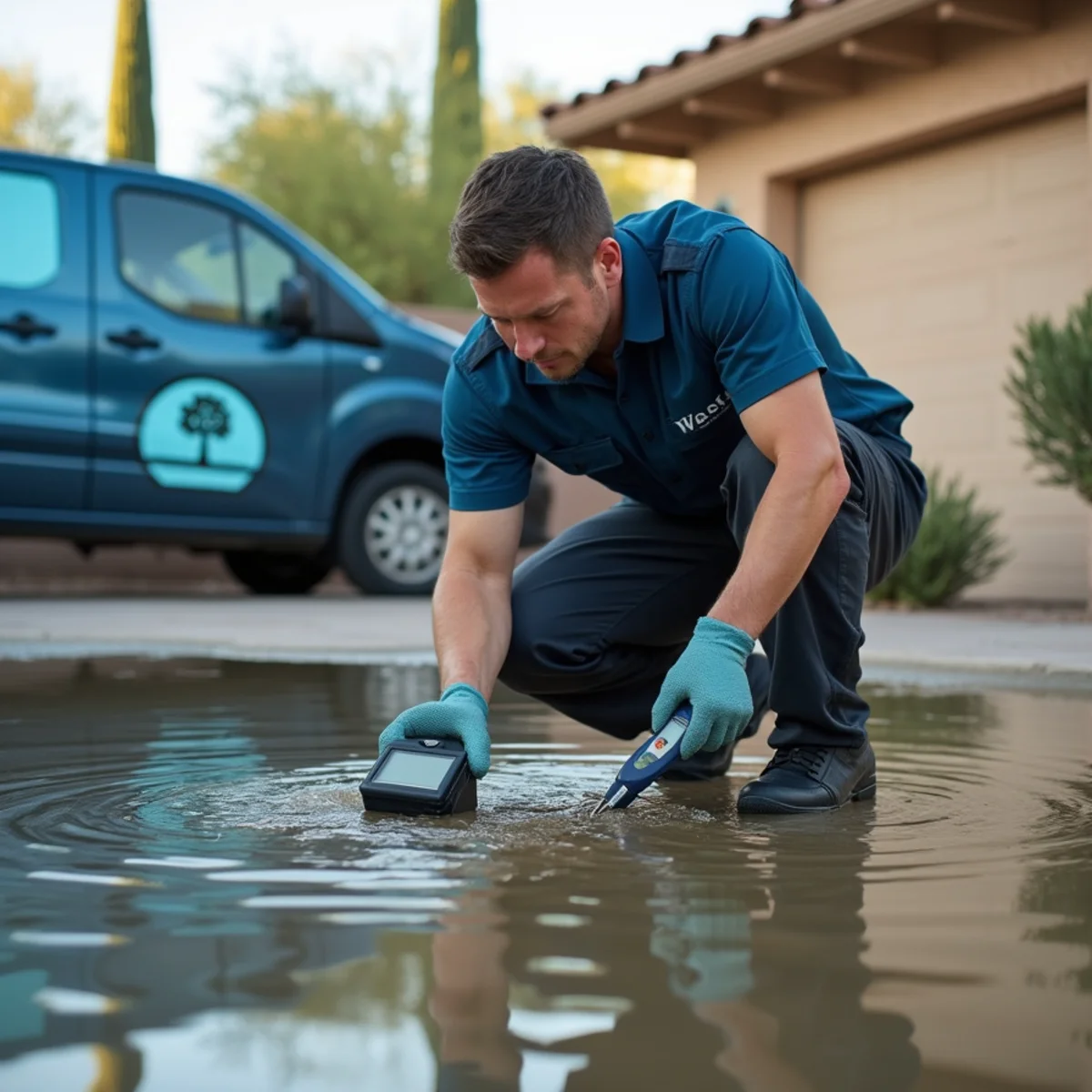

Your carpet is soaked and you are weighing a hard question: dry it or tear it out? The honest answer is that it depends, on three things — whether the water was clean, gray, or black; how long the carpet has been wet; and whether the pad underneath is soaked. Get clean water out fast and the carpet itself can often be saved. Let dirty water sit, and replacement is usually the safer call.
Carpet is one of the few things in a water loss where saving it is genuinely a close call that tips on timing. The same soaked carpet can be restorable on hour six and a mold problem on hour sixty. That is why the decision is less about the carpet and more about the water and the clock.
Here is how professionals decide, why the pad underneath is usually the real issue, and what you can do in the first hour to keep the odds in your favor.
Key Takeaways
- Whether wet carpet can be saved depends on three things: the water category, how long it has been wet, and whether the pad is soaked.
- Clean water caught within 24 to 48 hours gives carpet a real chance; black water means it must be removed.
- The pad underneath is usually the real problem — it holds water like a sponge but is inexpensive to replace, so it often comes out even when the carpet is saved.
- In Arizona heat, mold can start on wet carpet within 24 to 48 hours, which is why fast extraction and drying matter so much.
- Professional drying floats the carpet and uses extraction, air movers, dehumidifiers, and antimicrobial treatment — far more than a box fan can manage.
The three factors that decide it
Whether wet carpet can be saved comes down to three questions, in order. Miss any one of them and you can make the wrong call.
A professional reads all three together. Clean water, caught early, pad still mostly dry — that carpet likely stays. Dirty water, days old, pad saturated — it goes.
- What kind of water? Clean water from a supply line gives the carpet a real chance. Gray water from an appliance or a toilet overflow is borderline and often means the carpet goes. Black water, such as sewage or floodwater, means it comes out, no exceptions.
- How long has it been wet? The first 24 to 48 hours are the window. Carpet dried quickly inside that window can often be saved; carpet soaked for days usually cannot.
- Is the pad soaked? The carpet can be salvageable while the pad underneath is beyond saving. Whether the pad holds water changes the whole plan, which is the next point.
Why the carpet pad is usually the real problem
The carpet you see is rarely the hard part. The pad underneath it is. Carpet padding is built to be soft and absorbent, which means in a flood it behaves like a sponge — it soaks up water and holds onto it long after the carpet above feels, at most, a little damp.
That trapped water is what drives mold and odor, and a soaked pad will not dry in place on any useful timeline. The saving grace is that pad is inexpensive compared to the carpet itself and simple to replace. So the common outcome is the practical one: the pad comes out and is replaced, while the carpet is lifted, dried, and re-laid over fresh padding.
This is why a wet carpet and a ruined carpet are not the same thing. Often the carpet is fine and only the cheap layer beneath it needs to go.
Active water emergency right now?
We answer 24/7 — a real person, not a machine.
The 24 to 48 hour mold window in Arizona heat
The reason timing dominates this decision is mold. In Arizona heat, mold can begin growing on damp carpet and pad within 24 to 48 hours. A wet home in the Valley summer stays warm and humid inside regardless of how dry the air is outside, and that is exactly the environment mold wants.
Once mold is established in the carpet and pad, the math changes. You are no longer drying a wet floor; you are dealing with contamination, and that usually tips the decision toward removal. This is the whole case for acting fast — not panic, just the plain fact that the restorable window is measured in hours, not days.
What professional drying actually does
Saving wet carpet is not a matter of pointing a box fan at it and hoping. Professional drying is a specific process built to pull water out of the carpet, the pad, and the subfloor before mold gets a foothold:
Throughout, moisture meters confirm the materials are genuinely drying, so the call to keep or replace the carpet is made on readings, not guesses.
- Extraction — truck-mounted or portable units pull the bulk of the water out of the carpet and pad first.
- Floating the carpet — the crew lifts an edge and pushes warm air underneath, drying the carpet and subfloor from both sides at once.
- Air movers and dehumidifiers — high-velocity air movers evaporate the moisture while commercial dehumidifiers pull it out of the air, so it does not simply resettle.
- Antimicrobial treatment — the carpet, the pad area, and the subfloor are treated to stop bacteria and mold, which matters most after gray water.
When carpet has to be replaced
Sometimes drying is not the right answer, and a good crew will tell you so rather than charge you to dry something that belongs in a dumpster. Carpet generally has to be replaced when:
In these cases, trying to save the carpet costs more in the long run and risks your health. Replacement is the honest call.
- The water was black water — sewage, a drain backup, or floodwater — which contaminates the carpet beyond safe cleaning.
- It has been saturated for days, long enough that mold has set in or the fibers have broken down.
- The carpet has delaminated — the backing has separated from the fibers, which happens with prolonged soaking and cannot be reversed.
- Gray water soaked in and the carpet is older or low-value, where replacement simply makes more sense than restoration.
What you can do right now, before help arrives
The hours before a crew arrives are when carpet is won or lost. If the water is clean and it is safe to be in the room, a few quick moves protect your chances:
What not to do: do not wait to see if it dries on its own, and do not run a household vacuum to suck up water, which is a shock hazard and will ruin the vacuum. A free on-site assessment tells you honestly whether your carpet can be saved — before the mold window closes.
- Stop the water at its source, and if the water is dirty or near outlets, stay out of it entirely.
- Lift furniture off the carpet, or put foil or wood blocks under the legs, so finishes and rust do not stain it.
- Pull up small rugs and move what you can off the wet floor.
- Get air moving — run fans and the AC to pull the humidity down; open windows only if it is cooler and drier outside.
- Photograph everything before you move it, for your insurance claim.
- Call for professional extraction quickly — the sooner the water is out, the better the odds the carpet stays.
Frequently Asked Questions
Can wet carpet be saved?
Often, yes — if the water was clean, the carpet was dried within about 24 to 48 hours, and the pad is not destroyed. Clean-water losses caught early have the best odds. Gray water is borderline and often means replacement, and black water such as sewage or floodwater means the carpet has to go. Speed is the biggest factor you control.
Does wet carpet always need to be replaced?
No. Carpet soaked by clean water and dried quickly can often be saved, even when the pad underneath has to be replaced. Replacement becomes necessary with black water, long saturation over several days, delamination, or when mold has set in. A professional reads the water type, the timeline, and the pad before making the call.
How long does it take to dry wet carpet?
With professional equipment, wet carpet and the subfloor beneath it usually dry in about one to three days, confirmed by moisture readings rather than by touch. The exact time depends on how saturated it was, the humidity, and whether the pad was removed. Household fans alone take far longer and often cannot beat the mold window.
Will wet carpet cause mold?
It can, and quickly. In Arizona heat, mold can begin growing in damp carpet and pad within 24 to 48 hours, because a wet home stays warm and humid inside. Fast extraction and professional drying are what prevent it. Carpet and pad left wet for days should be treated as a mold risk and usually need to come out.