Not all water damage is equal, and the difference is not how much water you are standing in — it is what is in the water. Restoration professionals sort every loss into three categories: clean (Category 1), gray (Category 2), and black (Category 3). That category, far more than the size of the spill, decides what can be saved, what has to be thrown out, and how dangerous the cleanup is.
The categories come from the IICRC S500 standard, the industry reference for water damage work. They describe how contaminated the water is, from drinkable to dangerous. A clean supply line and a backed-up sewer can flood the same room to the same depth, yet they are two completely different jobs with two different price tags and two different levels of risk.
Here is what each category means, how clean water turns dirty faster than most people expect in Arizona heat, and what the category has to do with your insurance and your health.
Key Takeaways
- The categories of water damage — clean (1), gray (2), and black (3) — describe how contaminated the water is, and that matters more than how much water there is.
- Category 1 clean water comes from sanitary sources but degrades into gray and then black water the longer it sits.
- Category 2 gray water carries contamination that can make you ill; Category 3 black water is a serious health hazard needing containment and professional disposal.
- In Arizona heat, clean water left about 48 hours should no longer be treated as clean, and mold can start within 24 to 48 hours.
- The category affects both your insurance claim and your health, so when in doubt, treat the water as the worse category and stay out of it.
Why the category matters more than the amount of water
People fixate on how much water there is. A professional looks first at how dirty it is. The category drives three decisions that shape the entire job, and the number of gallons barely enters into any of them:
That is why a small black-water backup can be a bigger and more serious job than a large clean-water leak. Starting with the category, not the puddle, is how you get the response right.
- What can be saved versus what must be removed — clean water lets more materials dry in place, while black water sends most porous materials to the curb.
- The safety gear and containment — gray and black water call for protective equipment and sealing off the area so contamination does not spread.
- The cost and the labor — more removal, more disposal, and more protective work all climb with the category.
Category 1: clean water
Category 1 is water that starts out clean and poses no immediate health threat. It comes from a sanitary source, and if it is dried quickly it does the least damage of the three.
Common clean-water sources we see in the Valley include a broken supply line, an overflowing sink or tub that was running clean, a failed water heater, and rainwater coming straight in through a roof or a window. The water itself is not the hazard. Time is.
Here is the catch that surprises homeowners: clean water does not stay clean. Sitting on dirty flooring, soaking into drywall, and warming up inside an Arizona home, it picks up contaminants and feeds bacteria. Left long enough, Category 1 degrades into Category 2, and then into Category 3. The clock starts the moment it spills.
Active water emergency right now?
We answer 24/7 — a real person, not a machine.
Category 2: gray water
Category 2, or gray water, carries significant contamination — enough to cause illness or discomfort if you are exposed to it. It is not raw sewage, but it is not something to wade through or ignore either.
Typical gray-water sources are a dishwasher or washing-machine discharge, a toilet overflow that contains urine but no solids, and water from an aquarium or a waterbed. It can hold detergents, grease, bacteria, and food waste. Handling it means protective gear, careful removal of contaminated porous materials, and antimicrobial treatment of what stays.
Gray water has the same bad habit as clean water, only faster. Give it time and bacteria multiply, and Category 2 becomes Category 3. What was a manageable cleanup on day one turns into a far more hazardous job by day two or three.
Category 3: black water
Category 3, or black water, is grossly contaminated and a serious health hazard. It can carry bacteria, viruses, sewage, chemicals, and other dangerous waste, and contact with it can make you genuinely sick.
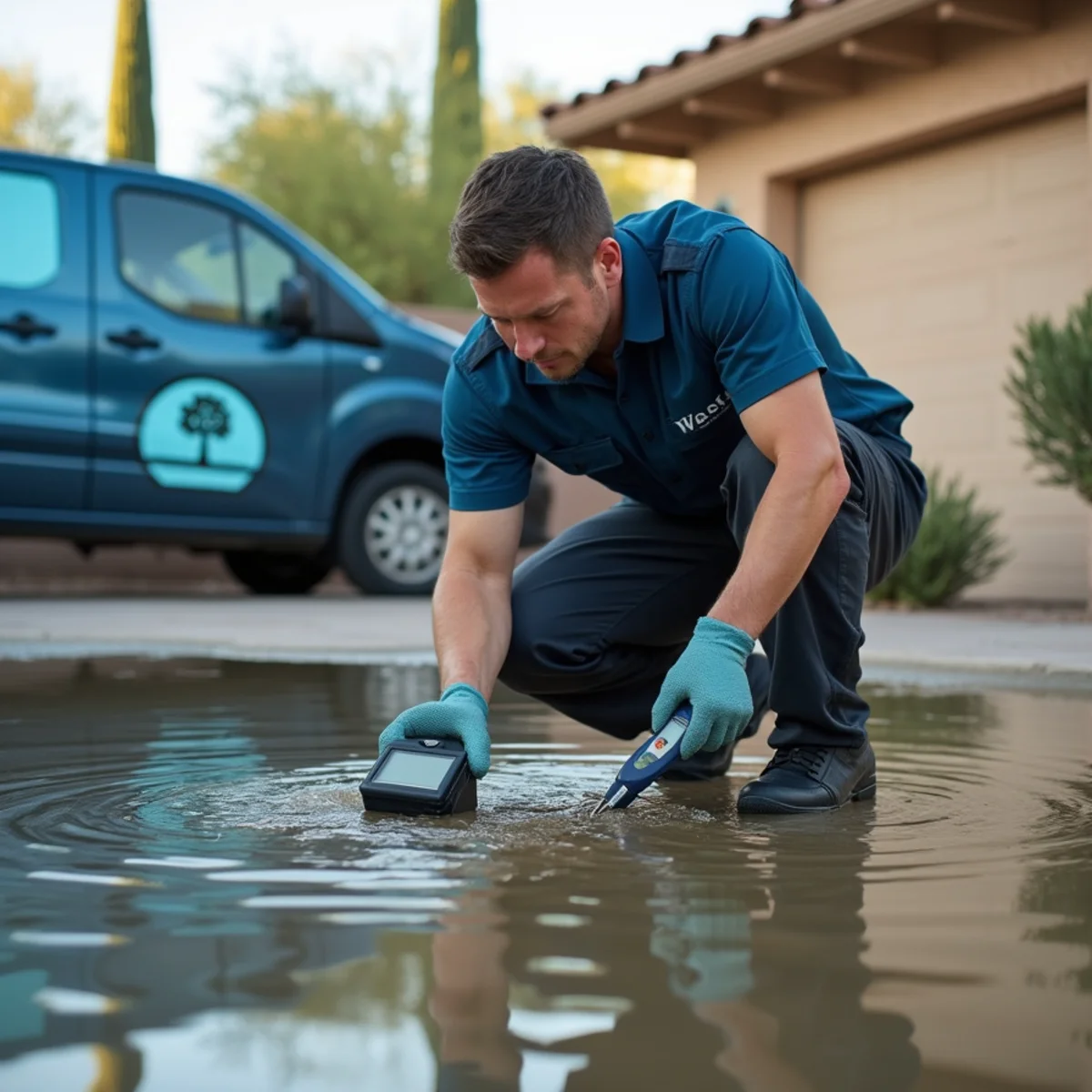
The sources are the worst-case ones: a sewage backup, a toilet overflow containing solids, a drain or sewer line that has backed up into the home, and floodwater that has flowed across the ground outdoors. In Arizona, a monsoon wash overflow or water pushing in under a door during a storm is treated as black water, because of everything it picks up on the way in.
Black water demands the full IICRC S500 response. The area is contained and sealed off to stop the contamination from spreading, crews work in protective equipment, porous materials that absorbed the water — carpet, pad, drywall, insulation — are removed and disposed of as contaminated waste, and every surface left behind is cleaned and sanitized. This is not a mop-and-bucket situation, and it is not a safe one to take on yourself.
How time and Arizona heat upgrade a category
The three categories are not fixed labels stamped on at the moment of the spill. They describe the water right now, and water gets dirtier as it sits. A clean supply-line leak that would have been a straightforward dry-out on Saturday morning can be a gray-water job by Sunday and worse by Monday.
Arizona speeds this up. Heat accelerates bacterial growth, and a wet home in the Valley summer is warm and humid inside no matter how dry the air is outdoors. The rule of thumb professionals use is that clean water left sitting for around 48 hours should no longer be treated as clean. That same heat drives mold, which can take hold within 24 to 48 hours here.
This is the real reason speed matters. Waiting to see whether it dries on its own does not just risk mold — it can bump the water up a category, turning a cheaper, cleaner job into an expensive, contaminated one.
What the category means for your insurance and your health
The category follows the water onto your insurance claim. A sudden clean-water loss, like a burst supply line, is the kind of event policies are built to cover. Gray and black water involve more removal, disposal, and sanitizing, and the coverage can get more complicated — sewer and drain backup, for instance, is often excluded unless you carry a specific endorsement. This is general information, not legal or coverage advice; your policy decides what is covered.
On the health side, the message is simpler. Clean water is mainly a race against time and mold. Gray water can make you ill. Black water is a genuine hazard that calls for protective gear, containment, and professional disposal — not a wet vacuum and a free Saturday. If you are unsure which category you are dealing with, treat it as the worse one until a professional confirms otherwise, and keep your family and pets out of it.
A free on-site assessment identifies the category, maps how far the water went, and lays out what can be saved — before contamination or heat makes the decision for you.
Frequently Asked Questions
What are the categories of water damage?
There are three. Category 1 is clean water from a sanitary source, like a broken supply line or a failed water heater. Category 2, gray water, carries contamination from sources like a dishwasher or a toilet overflow without solids. Category 3, black water, is grossly contaminated — sewage, drain backups, and floodwater. They come from the IICRC S500 standard.
What is category 3 water damage?
Category 3, or black water, is grossly contaminated water that is a serious health hazard. It includes sewage backups, toilet overflows with solids, backed-up drains, and floodwater that has crossed the ground. It can carry bacteria, viruses, and chemicals, so it requires containment, protective gear, removal of soaked porous materials, and professional sanitizing.
Is gray water dangerous?
Yes, enough to make you sick if you are exposed to it. Gray water carries significant contamination — bacteria, detergents, food waste, or grease — from sources like dishwashers, washing machines, and toilet overflows without solids. It is not raw sewage, but you should not wade through it or try to dry it yourself, and it turns into black water if left to sit.
How long before clean water becomes contaminated?
Faster than most people expect, especially in Arizona heat. As a rule of thumb, clean water left sitting for around 48 hours should no longer be treated as clean, because it soaks up contaminants and feeds bacteria. Warm indoor temperatures speed this up, and mold can begin within 24 to 48 hours, so quick drying is what keeps a clean-water loss clean.