How To Save Cupped Hardwood Floors After a Water Leak
Hardwood that has cupped after a leak looks ruined, but it often is not. With fast specialty drying, many floors flatten back and never need refinishing. Here is what makes the difference.


Cupped or buckled wood floors after a leak? Floor-mat drying can often save them instead of a full tear-out. We answer 24/7, with a 60-minute response target.
Your hardwood is cupping — the edges of the boards rising above the centers — or it has started to buckle and lift off the subfloor after a leak or a spill. The first instinct is that it is ruined and has to be torn out. Often, that is not true. What happens next depends almost entirely on how fast the drying starts.
Wood and water do not mix well: the boards absorb moisture, swell, cup, and eventually buckle, while mold can begin underneath within 24 to 48 hours in Tempe’s heat. But wood also gives moisture back if you draw it out correctly and quickly. The gap between saving a floor and replacing it — an expensive job made harder when the original species or stain is discontinued — usually comes down to hours, not days.
We can often save hardwood with floor-mat drying systems that pull moisture up through the boards without tearing them out. We answer around the clock with a 60-minute response target, because on a wet wood floor, speed is the single biggest factor in whether it survives. It starts with a moisture inspection, not a demolition estimate.

Every hardwood floor water damage job covers the full scope — one crew from the first pass to the last moisture reading.
Active water emergency right now?
We answer 24/7 — a real person, not a machine.
Saving a wood floor is a race against moisture, and it runs on the IICRC S500 standard. Here is how we decide what can be dried and dry it before the damage sets.
We measure the boards and the subfloor with moisture meters and map the spread with thermal imaging. Those readings tell us how far the water traveled and, honestly, whether the floor can be dried and saved or is too far gone.
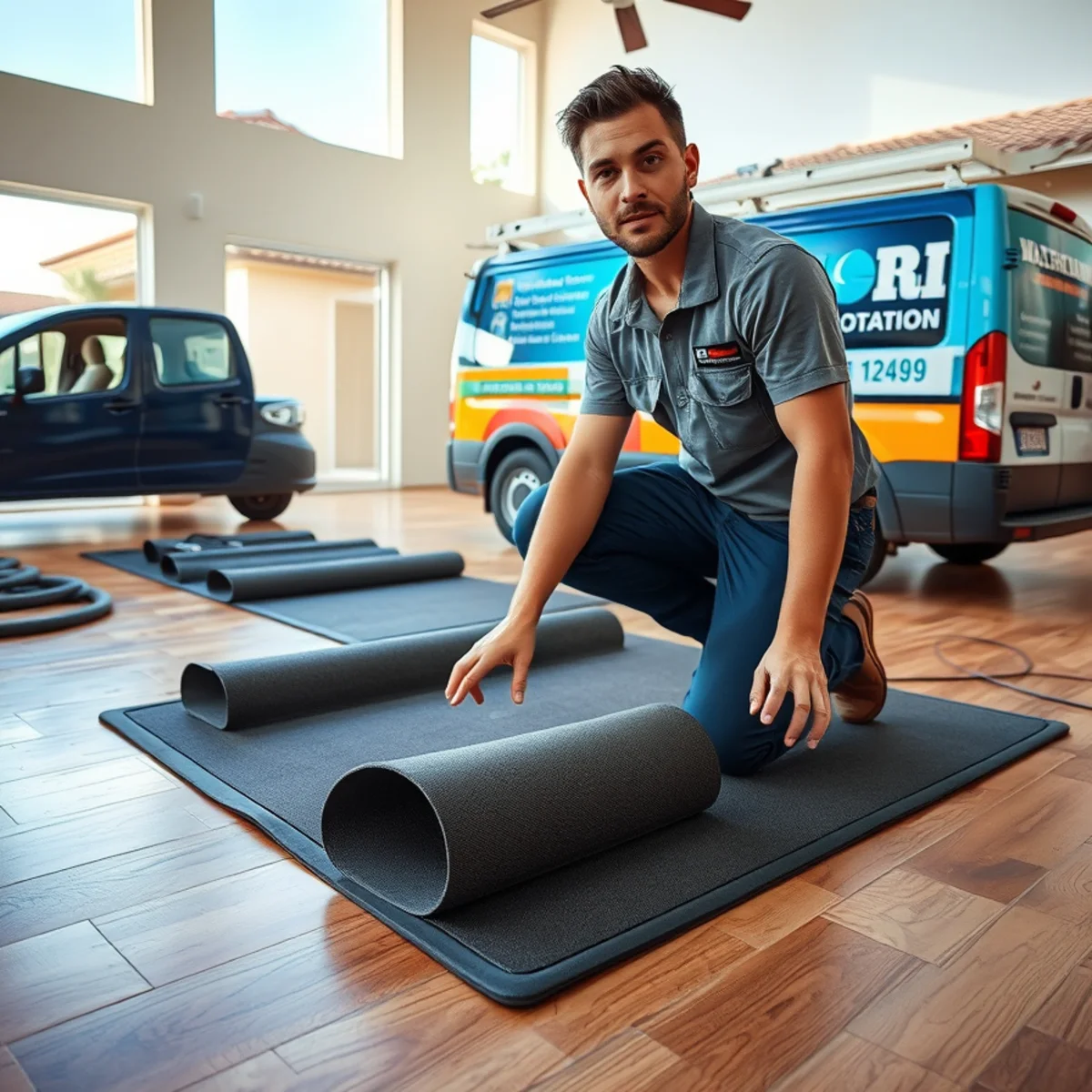
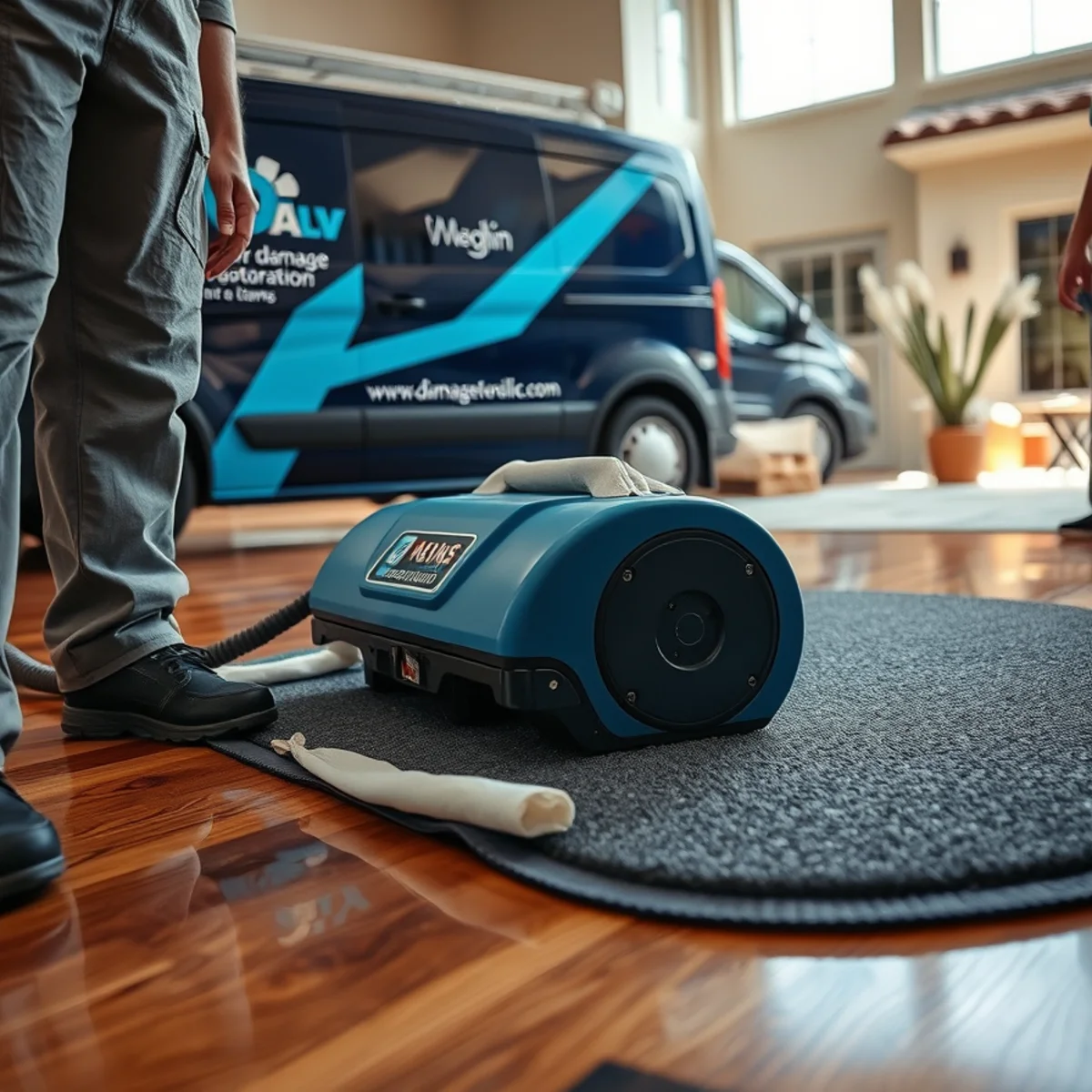
We remove surface water, then lay floor-mat drying systems that seal to the wood and vacuum moisture up through the boards and subfloor — the method that dries a hardwood floor in place instead of prying it up plank by plank.
Alongside the mats, we run LGR dehumidifiers and air movers to control the room’s humidity and dry the subfloor and joists beneath. We monitor readings daily and keep going until the wood reaches a verified dry standard.
Once the floor is dry, we reassess. Many floors flatten as the moisture leaves and need only sanding and refinishing. Boards that stayed wet too long, or engineered planks whose layers have delaminated, get replaced — and now we know exactly which is which.
We sand and refinish the saved floor, or weave in new boards and blend the stain and species to match the existing wood, then reset baseboards so the repair disappears into the rest of the room.
Floor-mat drying works by sealing panels to the surface and using vacuum to pull moisture up and out through the wood and subfloor, rather than trapping it or ripping everything out to reach it. On solid hardwood, started quickly, it saves floors that look like write-offs — as the wood dries, much of the cupping relaxes back toward flat. Engineered wood is trickier, since a thin veneer over glued layers can delaminate, and some of those planks do need replacing.
The one thing we cannot buy back is time. Every hour the boards stay wet, more cupping locks in, the subfloor absorbs more, and the odds of a full tear-out climb. That is the whole reason we push a 60-minute response on wood floors specifically — the sooner the mats go down, the more floor we save and the less you spend.
On insurance, a sudden leak or appliance failure that damages hardwood is generally covered, while a slow seep left unaddressed is often treated as maintenance. We document the moisture readings and the drying from day one so your claim is well supported. This is general information, not coverage advice — your policy has the final word.

We never quote a scary number over the phone. After a free on-site assessment you get a clear estimate. These are the factors that move the price:
We answer 24/7 and dispatch immediately, with a 60-minute response target across the south-side Valley.
Our yard sits on Auto Drive in 85284 near the I-10 Broadway Curve — not a call center three states away.
IICRC-certified crews following the S500 drying standard, with documentation your adjuster expects.
Extraction, drying, and full repair under one roof — you never juggle multiple contractors.
We document every reading and photo and work directly with your carrier to keep the claim moving.
We monitor moisture daily and prove the structure is dry — the real way to stop mold.
Often it can be saved, especially when we start floor-mat drying quickly. Solid hardwood tends to flatten as it dries. The answer depends on how long it stayed wet and whether it is solid or engineered — the moisture inspection tells us.
It is a system of panels that seal to the floor and use vacuum to draw moisture up through the boards and subfloor. It dries hardwood in place, which is how we save floors instead of tearing them out.
Longer than carpet — wood gives up moisture slowly, so it usually runs several days. We monitor readings daily and keep the equipment running until the wood hits a verified dry standard rather than guessing.
Much of it often does. As moisture leaves, cupped boards tend to relax back toward flat. Once the floor is dry and stable, a sanding and refinish evens out what remains.
A sudden leak or appliance failure is generally covered, while a slow, neglected leak often is not. We document the readings and drying to support your claim. Your specific coverage is set by your policy, so consider this general information only.

Hardwood that has cupped after a leak looks ruined, but it often is not. With fast specialty drying, many floors flatten back and never need refinishing. Here is what makes the difference.

Wet drywall is not automatically ruined, and it is not automatically fine. Whether it dries or gets cut out comes down to a few clear factors. Here are the rules we use on every job.
When you call, a real person answers and a crew is dispatched immediately — with a 60-minute response target across South Tempe, Ahwatukee and Chandler.