7 Signs of a Slab Leak in 1960s–90s Tempe Ranch Homes
In Tempe’s older slab-on-grade ranch homes, a pinhole leak under the concrete can run for weeks before you see it. Here are the seven signs that give it away early.


The plumber found and fixed the leak — now the floor, walls, and cabinets are still wet. We restore the damage a slab leak leaves behind, 24/7, with a 60-minute response target.
The plumber located the slab leak, rerouted or spot-repaired the line, and left. What is left behind is your problem now: a slab that has been soaking for weeks, warped flooring, swollen baseboards, and drywall wicking moisture up the walls. The pipe is fixed. The water damage is not.
Slab leaks in Tempe rarely announce themselves. In-slab copper in 1960s–90s ranch homes has reached pinhole-leak age, and on slab-on-grade construction a pinhole can drip under the concrete for months before a warm floor spot or a jump in the water bill gives it away. All that time, water spreads sideways through the slab and into everything touching it. In our heat, mold can start within 24 to 48 hours once materials stay damp.
This is the part we handle. Based on Auto Drive off I-10 and available around the clock, we pick up where the plumber leaves off — drying the slab to a verified dry standard and rebuilding the floors, cabinets, and walls. Call and a real person answers, with a 60-minute response target across the south-side Valley.

Every slab leak water damage restoration job covers the full scope — one crew from the first pass to the last moisture reading.
Active water emergency right now?
We answer 24/7 — a real person, not a machine.
Slab leak restoration follows the IICRC S500 standard, but drying concrete is its own job — the slab holds water long after the surface looks dry. Here is how we take it from wet to rebuilt.
We start after the plumbing is fixed. Using moisture meters, thermal imaging, and slab probes, we map how far water traveled through the concrete, into wall cavities, and under cabinets — so we dry the whole affected area, not just the obvious wet patch.
We pull any standing water with truck-mounted extraction, then open access where it is needed: detaching baseboards, removing wet flooring, and cutting drywall a few inches up so the wall cavity can dry instead of trapping moisture behind it.
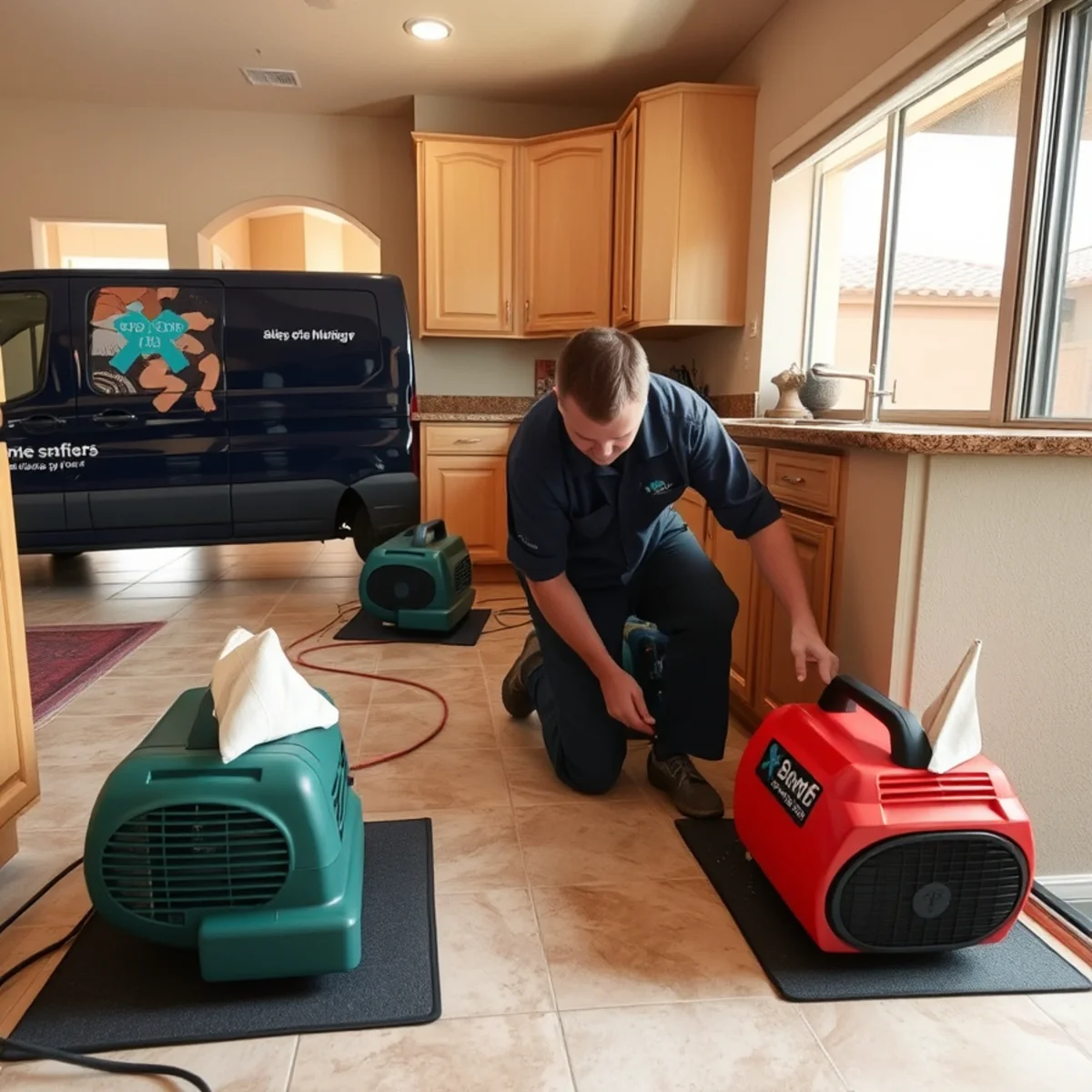
Concrete releases water slowly, so we set LGR dehumidifiers and air movers and, where trapped moisture calls for it, dry the subsurface directly. We monitor readings daily and keep drying until the slab and framing hit a verified dry standard — no guessing.
Because slab leaks run hidden and slow, we check for early mold, apply antimicrobial treatment to affected surfaces, and neutralize the damp, musty odor that a long leak leaves in the concrete.
Once everything reads dry, we rebuild — new or refit flooring, baseboards, drywall, paint, and cabinet repair — and patch the access point the plumber left in your floor, returning the room to its pre-loss condition.
A slab leak is a two-trade job. A licensed plumber diagnoses and repairs the pipe, usually by rerouting the line overhead or spot-repairing the failed section. We handle the water damage that repair uncovers. Keeping those lanes separate matters: your plumber should not be left to dry a slab, and drying a slab is exactly what we do every week.
The reason concrete needs real drying is simple — it wicks and stores moisture. Reinstall flooring over a slab that still holds water and you get failed adhesives, re-cupped boards, and mold blooming under a brand-new floor within days. We drill, probe, and monitor until the readings prove the slab is dry, then rebuild once, correctly.
On insurance, the general pattern in Arizona is that the sudden resulting water damage is often covered even when the failed pipe itself is not, and tearing out flooring to reach the leak may fall under access coverage. Policies vary, so we document the loss from the first moisture reading forward to support your claim. This is general information, not coverage advice — your policy governs.

We never quote a scary number over the phone. After a free on-site assessment you get a clear estimate. These are the factors that move the price:
We answer 24/7 and dispatch immediately, with a 60-minute response target across the south-side Valley.
Our yard sits on Auto Drive in 85284 near the I-10 Broadway Curve — not a call center three states away.
IICRC-certified crews following the S500 drying standard, with documentation your adjuster expects.
Extraction, drying, and full repair under one roof — you never juggle multiple contractors.
We document every reading and photo and work directly with your carrier to keep the claim moving.
We monitor moisture daily and prove the structure is dry — the real way to stop mold.
No — a licensed plumber locates and repairs or reroutes the pipe. We come in after that to restore the water damage: drying the slab, walls, and cabinets, then rebuilding. We coordinate with your plumber so the handoff is clean.
Concrete stores moisture and gives it up slowly. We monitor readings daily and keep the equipment running until the slab reaches a verified dry standard, which usually takes longer than drying carpet or drywall alone.
Yes. Patching the access opening, matching tile or wood, and rebuilding baseboards and cabinet toe-kicks are all part of the restoration. You get the room back looking like the leak never happened.
Often the resulting water damage is covered even when the pipe repair is not, and access to the leak may be included. Coverage depends on your policy, so we document everything to support the claim. This is general information, not advice.
We probe and meter the concrete to a verified dry standard before any flooring goes back down. Concrete holds moisture long after the surface feels dry, and installing over a slab that is still wet is what makes new boards cup and adhesives fail. We answer 24/7, monitor readings daily, and only rebuild once the numbers prove it is dry.

In Tempe’s older slab-on-grade ranch homes, a pinhole leak under the concrete can run for weeks before you see it. Here are the seven signs that give it away early.

A slab leak can soak your floors before you see a drop. Here is how Arizona homeowners insurance usually treats the water damage, what gets excluded, and how to keep your claim clean.
When you call, a real person answers and a crew is dispatched immediately — with a 60-minute response target across South Tempe, Ahwatukee and Chandler.