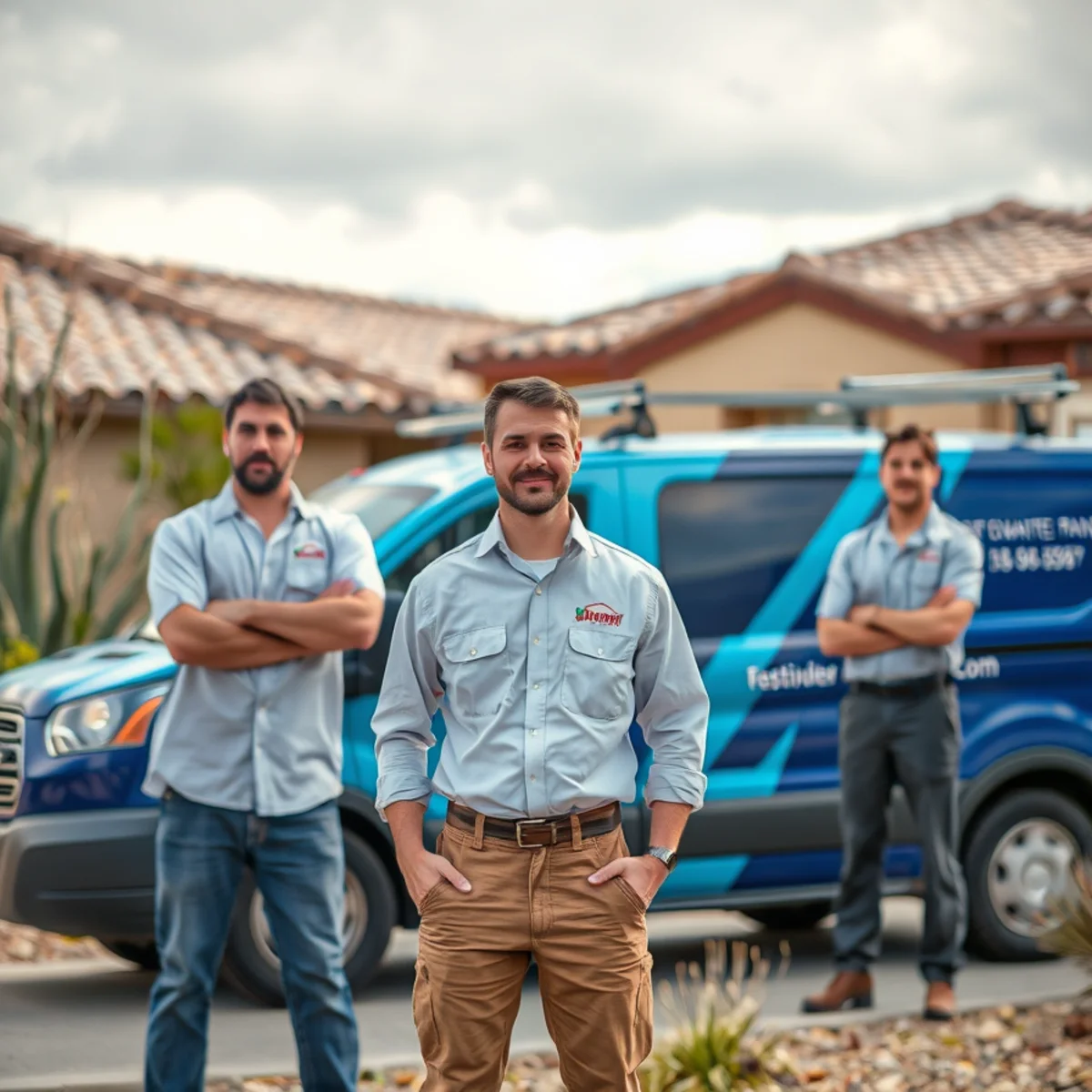
Monsoon Season in Tempe (June 15–Sept 30): A Home Flood Survival Guide
Tempe’s monsoon runs from June 15 to September 30, and the worst storms give almost no warning. This guide covers how to ready your home, what to do mid-storm, and who to call.


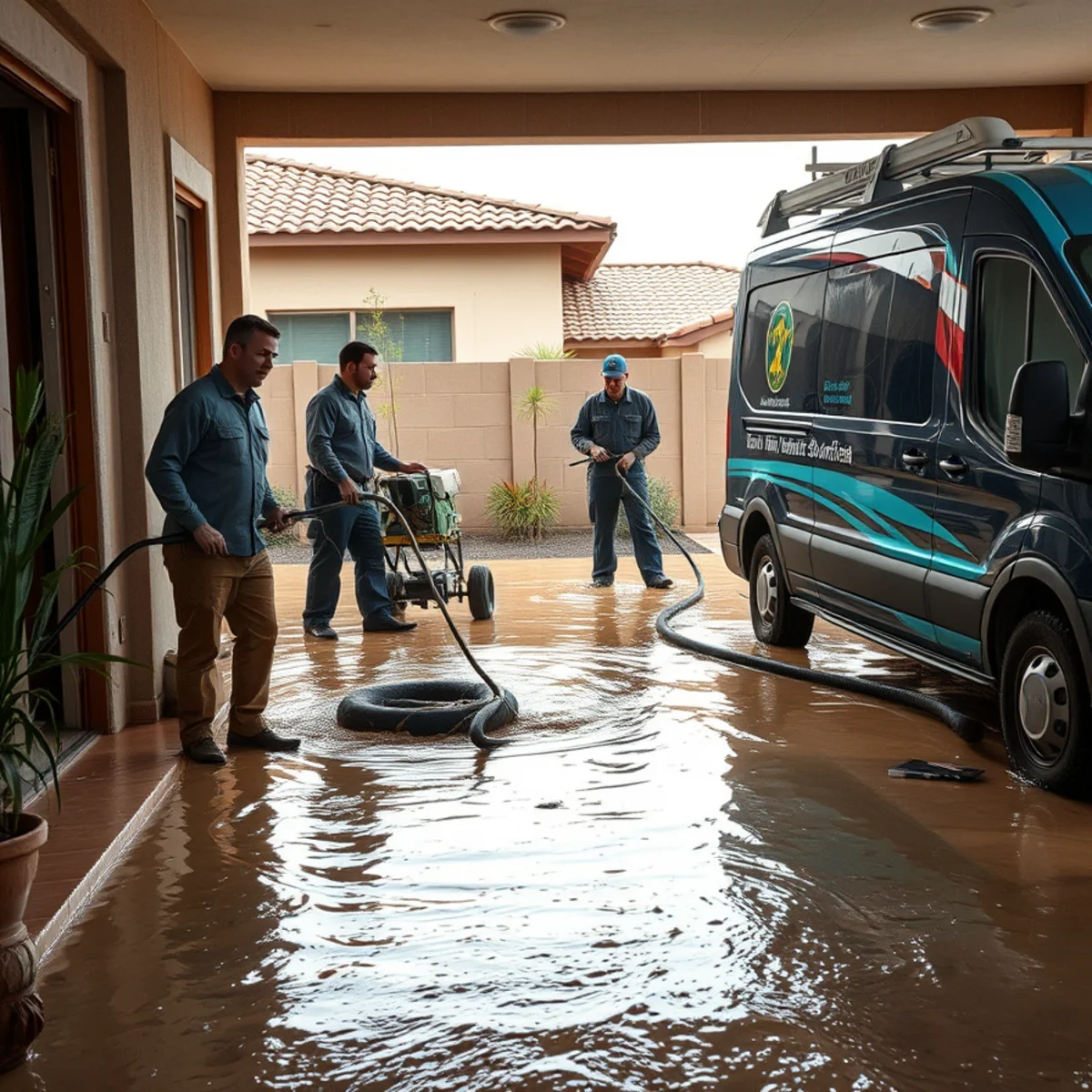
A monsoon storm or haboob forced water into your home? We answer live 24/7 and dispatch with a 60-minute response target across Tempe — tarping the roof and drying the structure before mold sets in.
Arizona storms do their damage in minutes. A microburst drives rain sideways through a roof seam or window frame, a haboob packs dust into the water, and a flat roof that was fine yesterday is dripping into the ceiling today. Start with safety: stay clear of downed power lines and sagging ceilings, cut power to any flooded room, then call us at (866) 688-0301 so a crew can stop the water and start drying.
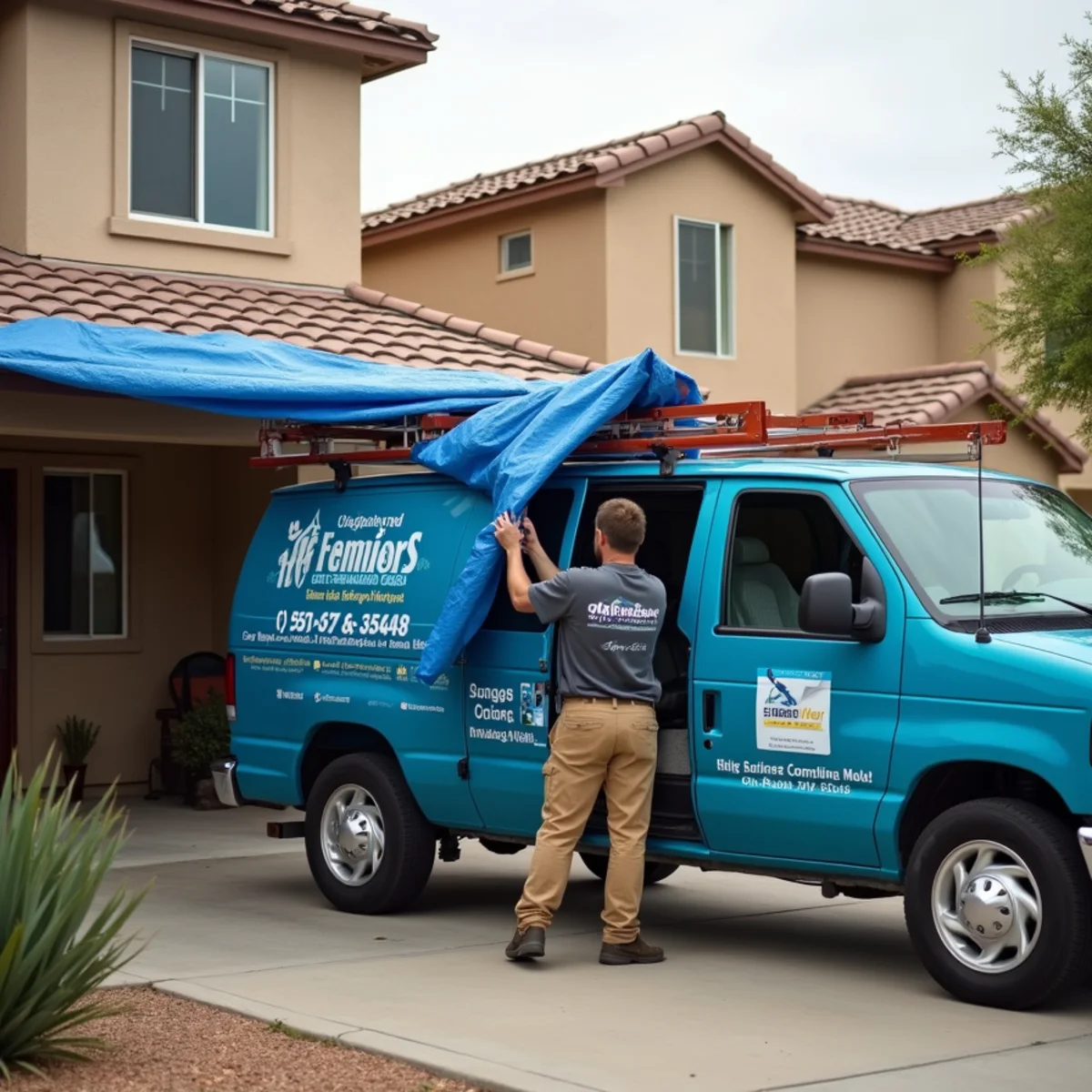
Put buckets under active drips and move furniture and electronics clear of the water, but do not climb onto a wet roof to find the leak — the footing is dangerous, and that is our job. Photograph the damage inside and out before you move anything, including branches or debris that struck the house. If the roof or a window is open to the sky, we can tarp and board it up the same visit.
We are a locally owned crew that has worked Tempe monsoons for about fifteen years, so we know what an August downpour does to a slab home and a flat roof. Storm damage is usually a water problem with a structural entry point, and we handle both — securing the opening, extracting the water, drying to the IICRC S500 standard, and rebuilding what the storm tore up.

Active water emergency right now?
We answer 24/7 — a real person, not a machine.
Storm work starts by stopping more water from getting in, then moves straight to drying out what already did — all on the IICRC S500 standard.
You reach a real person at any hour. We dispatch with a 60-minute response target and tarp the roof or board up the opening first, so the next cell of the storm does not undo the work before it starts.
We trace where the water got in and where it went. Moisture meters and thermal imaging reveal the full wet footprint behind ceilings and inside walls — storm water rarely stays where you can see it.
Standing water comes out fast with truck-mounted extraction, and we pull saturated insulation and soaked materials that would otherwise hold moisture and feed mold.
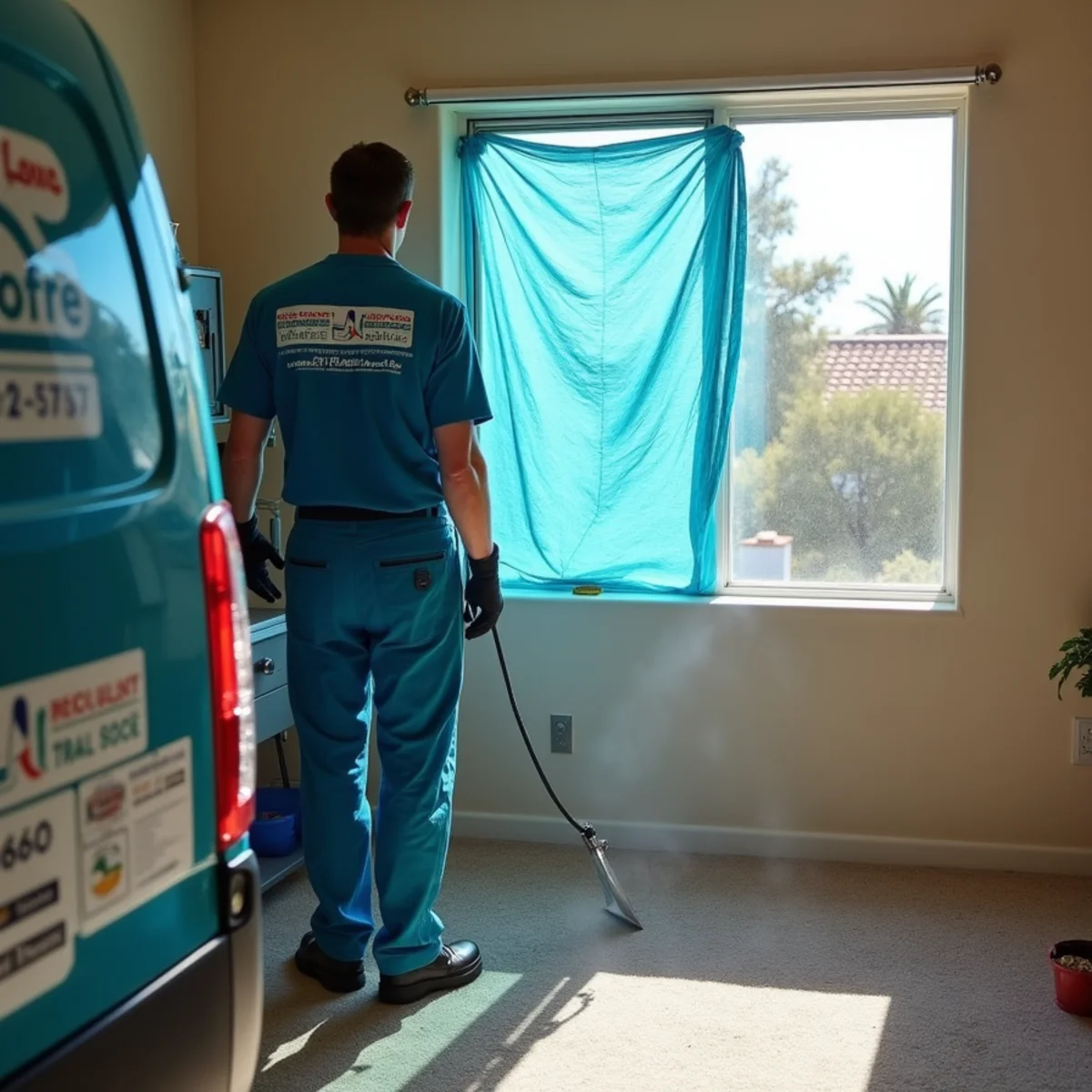
LGR dehumidifiers and air movers dry the structure to a verified standard, monitored daily — the stage that keeps a roof leak from becoming a mold remediation two weeks later.
Because mold can take hold within 24 to 48 hours here, we apply antimicrobial treatment to at-risk areas as they dry and flag anything that needs full remediation before it spreads.
We put the home back — roof repairs, drywall, insulation, paint, and flooring — so you deal with one crew from the emergency tarp through the rebuild, not a separate roofer, dry-out company, and contractor.

The monsoon runs from mid-June to late September, and it does not bring the slow, steady rain other regions get. It brings microbursts — short, violent downpours with straight-line winds that drive rain nearly horizontal. That rain finds every weak point: a worn roof seam, a gap in the flashing, the top of a window, a wall penetration never sealed right. Flat roofs, common on Tempe homes and on the commercial buildings along the Kyrene corridor, make it worse by ponding water over a seam instead of shedding it.
Haboobs add a second problem. A dust storm coats everything in fine grit, and when the rain follows minutes later, that grit turns to mud on sills, in wall cavities, and across floors — so clearing the intrusion means cleaning out the dust, not just drying. And because most Tempe homes sit on slabs with no basement, the water spreads flat and fast into wall bases, where it is easy to miss and quick to grow mold.
This page covers the full arc of storm damage — the intrusion, the dry-out, and the rebuild. If water is pouring in right now and the house is actively flooding, our Monsoon Flood Emergency service is the faster first call; it is built for live flooding and gets a crew extracting immediately. The two work together: the flood team stops the active water, and storm damage restoration carries the same loss through drying, mold treatment, and the rebuild. Same company, same crew.
We never quote a scary number over the phone. After a free on-site assessment you get a clear estimate. These are the factors that move the price:

Free on-site assessment, a clear written scope, and 24/7 crews with a 60-minute response target.
We answer 24/7 and dispatch immediately, with a 60-minute response target across the south-side Valley.
Our yard sits on Auto Drive in 85284 near the I-10 Broadway Curve — not a call center three states away.
IICRC-certified crews following the S500 drying standard, with documentation your adjuster expects.
Extraction, drying, and full repair under one roof — you never juggle multiple contractors.
We document every reading and photo and work directly with your carrier to keep the claim moving.
We monitor moisture daily and prove the structure is dry — the real way to stop mold.
It usually turns on how the water got in. Most Arizona policies cover wind-driven rain that enters through a storm-created opening — a roof the wind tore open, a broken window. Rising groundwater or flood water at the slab is typically excluded and needs separate flood insurance. We document the point of entry from the first visit. This is general information, not coverage advice — your policy decides what is covered.
Catch active drips, move valuables and electronics clear of the water, and photograph everything before you clean up. Stay off a wet roof and away from any sagging ceiling. Then call us — we can tarp the roof to stop more water and start extracting the same visit.
Storm damage restoration is the full arc — stopping the intrusion, drying out, and rebuilding. Our Monsoon Flood Emergency service is for water actively flooding your home right now and gets a crew extracting immediately. If it is an active emergency, start there; otherwise, this is your path. Either way, it is the same local crew.
We answer 24/7 and target a 60-minute response across Tempe and the south-side Valley, and roof tarping or board-up is usually the first thing the crew does on arrival. Securing the opening before the next storm cell rolls through protects everything the rebuild will restore.
Yes. One crew takes the job from the emergency tarp through water extraction, structural drying, mold treatment, and full reconstruction — roof repairs, drywall, insulation, paint, and flooring. You are not left coordinating a roofer, a dry-out company, and a contractor on your own.

Tempe’s monsoon runs from June 15 to September 30, and the worst storms give almost no warning. This guide covers how to ready your home, what to do mid-storm, and who to call.

The dust storm comes first, then the rain. On Tempe’s flat roofs, that order is the whole problem — haboobs clog the drains, and the downpour backs up and finds its way inside.
When you call, a real person answers and a crew is dispatched immediately — with a 60-minute response target across South Tempe, Ahwatukee and Chandler.