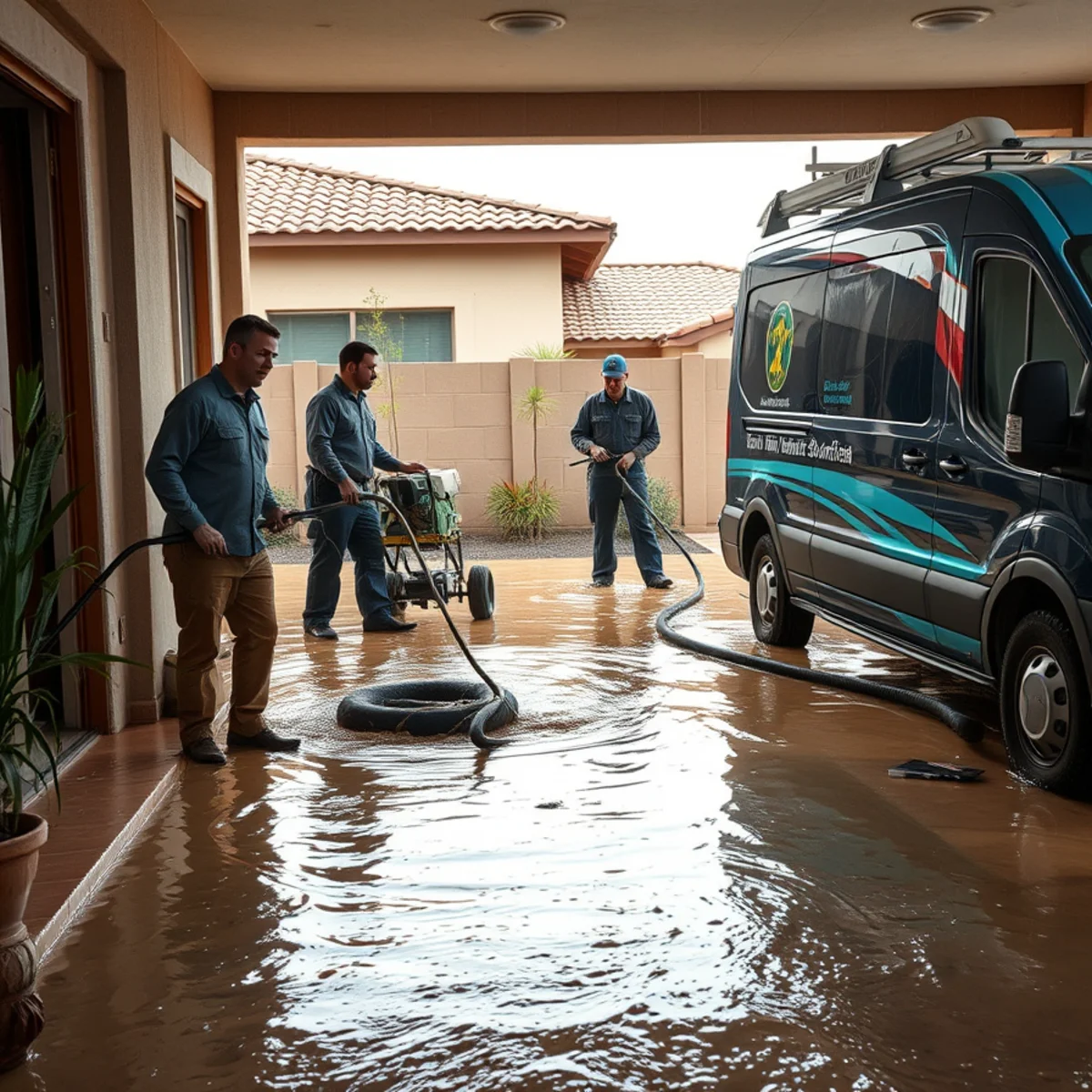
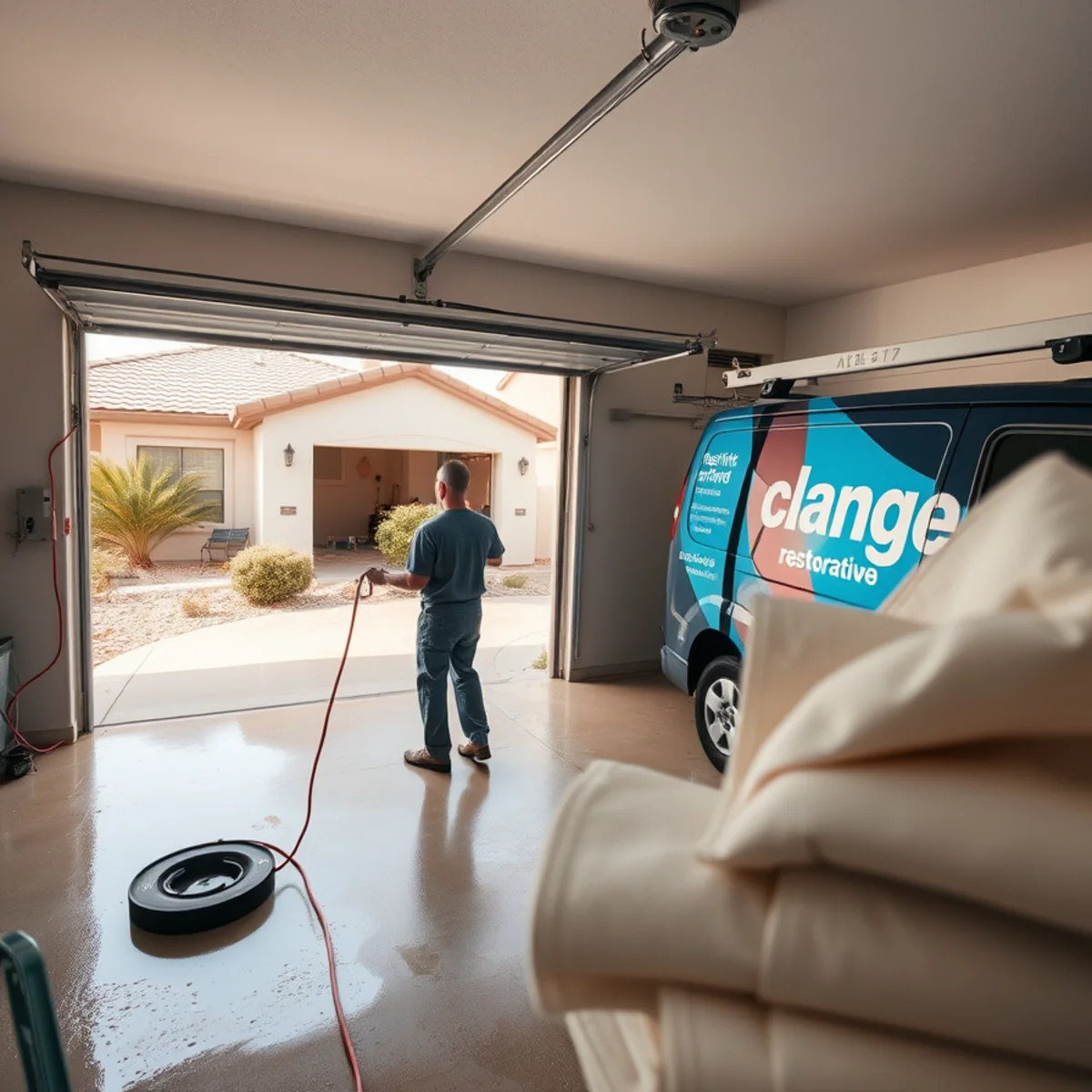
When a monsoon cell stalls over the south-side Valley, the water comes fast and from every direction — sheeting across the yard against the garage door, pushing under thresholds, and finding its way through roof scuppers a haboob just battered. Desert ground does not soak up a hard rain; it sheds it, straight toward your slab.
Safety first with storm water. Do not walk into standing water where outlets or a panel could be live — cut power to the flooded area at the breaker only if you can reach it from a dry spot, or wait for us. Move people, pets, and what belongings you can up to dry ground, and photograph the flooding and any exterior entry point before cleanup. Treat storm water as dirty until proven otherwise.
Then call. From June 15 through September 30 we keep crews on standby for exactly this, and we answer live at any hour a storm hits. We target a 60-minute response across Ahwatukee Foothills, South Tempe, Tempe, and Knoell Gardens, though a bad storm night can stretch that — we dispatch the instant you call.
Monsoon Season, Flood Insurance, and Standby Crews
Arizona’s monsoon runs June 15 through September 30, and it does its damage in bursts — a single stalled cell can drop more water in an hour than a wash can carry. The Ahwatukee Foothills and the low spots around South Tempe feel it first, where runoff off the high desert funnels toward homes. We plan our summer staffing around that window and keep crews and equipment ready so a 2 a.m. flood does not have to wait for morning.
There is an insurance wrinkle worth knowing before the storm, not after: standard homeowners policies generally do not cover rising storm or flood water — that usually requires a separate flood policy. Water that comes in through a storm-damaged roof may fall under your homeowners coverage, while water that rose up from the ground outside typically does not. We document exactly how and where the water entered so the right coverage can be sorted out. (General information only; your policies govern.)
One inch of floodwater inside can mean roughly $25,000 in damage once it reaches drywall, flooring, and belongings, and in our heat mold can start within 24 to 48 hours. That combination — fast, dirty water and a short mold clock — is why monsoon flooding is never a wait-and-see situation.