Water Heater Burst in the Garage: How To Limit Damage Fast
Water heaters usually sit in the garage in Arizona, and when the tank lets go it releases 40 gallons or more at once. Move fast and in the right order to limit the damage.


Water heater let go and flooded the garage, attic, or closet? We clean up 40-to-80-gallon tank floods 24/7, with a 60-minute response target across the Tempe area.
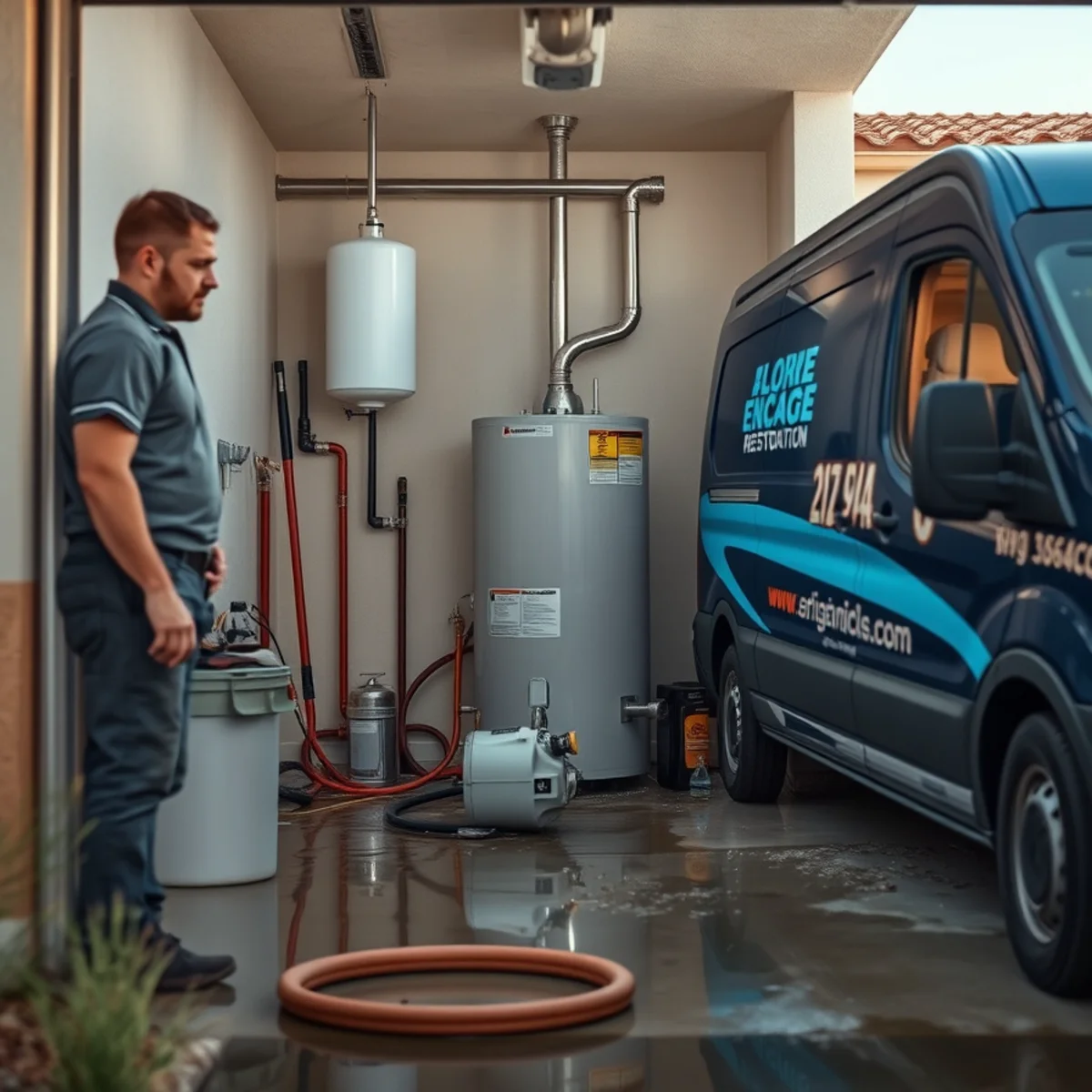
A failed water heater dumps a lot of water at once. These tanks hold 40 to 80 gallons, and when the tank corrodes through or a fitting lets go, all of it ends up on your floor — or worse, through your ceiling if the heater lives in the attic. What starts as a puddle by the tank can soak drywall, insulation, and flooring in a hurry.
Shut the water off first. Close the cold-water supply valve on top of the heater if you can reach it; if not, shut the main. Then kill the tank’s energy source — flip the breaker for an electric unit, or turn the gas valve to off — so it is not heating a draining tank. Cut power to any flooded room at the breaker before you step in, and snap photos of the tank and the water before you mop up a thing.
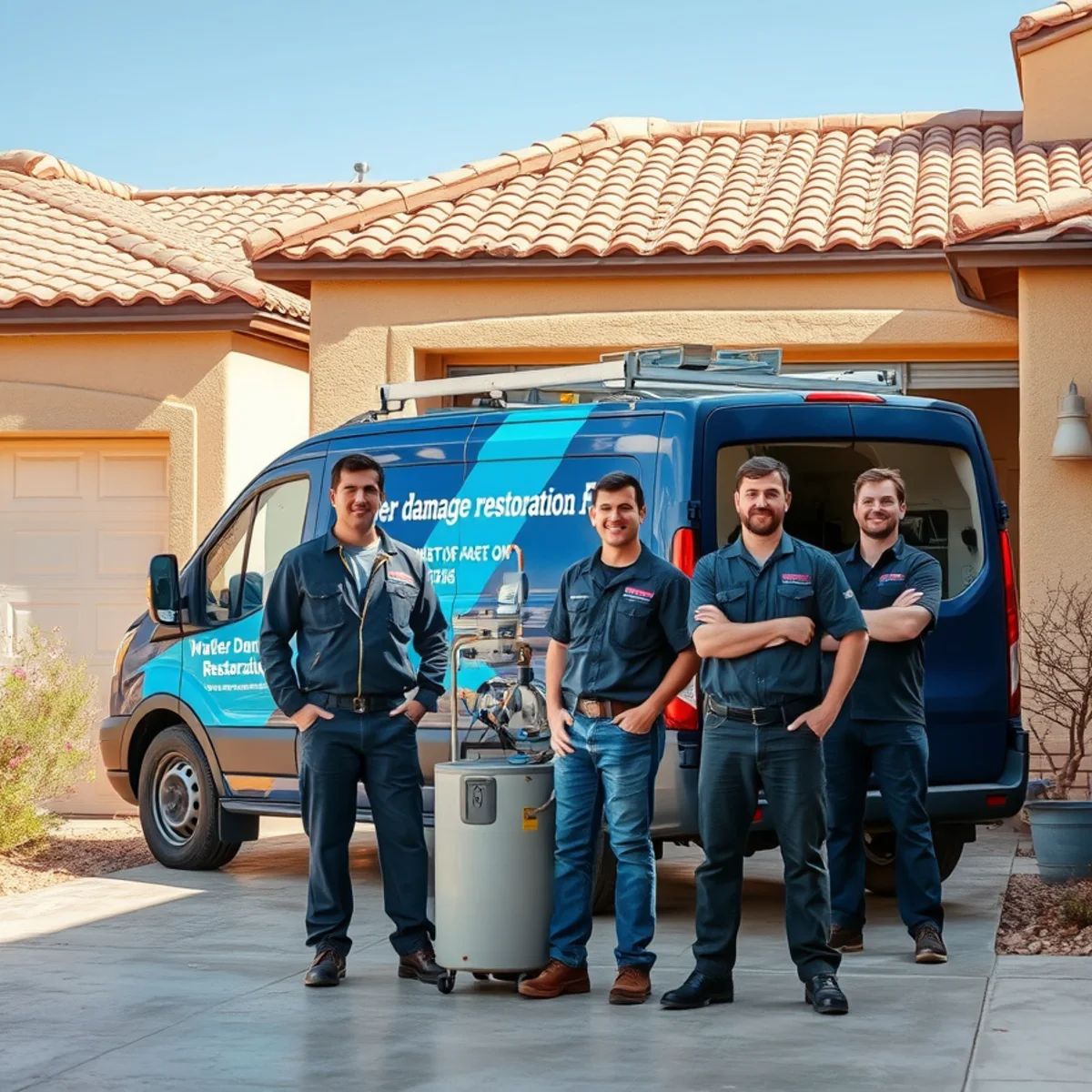
Then call us. We answer live at any hour and roll a crew with a 60-minute response target across Scottsdale, South Tempe, Chandler, and the Marilyn Ann area, ready to extract the flood and dry everything the tank soaked — including the parts of the ceiling and wall you cannot see.

Every water heater leak & burst cleanup job covers the full scope — one crew from the first pass to the last moisture reading.
Active water emergency right now?
We answer 24/7 — a real person, not a machine.
A water-heater flood is a race between 40-to-80 gallons and your drywall. Here is how we stop it and dry it out, following the IICRC S500 standard.
On the call we make sure the water and the tank’s power or gas are off, then dispatch a crew with a 60-minute response target. Stopping the supply keeps a one-time tank flood from being fed by the incoming line.
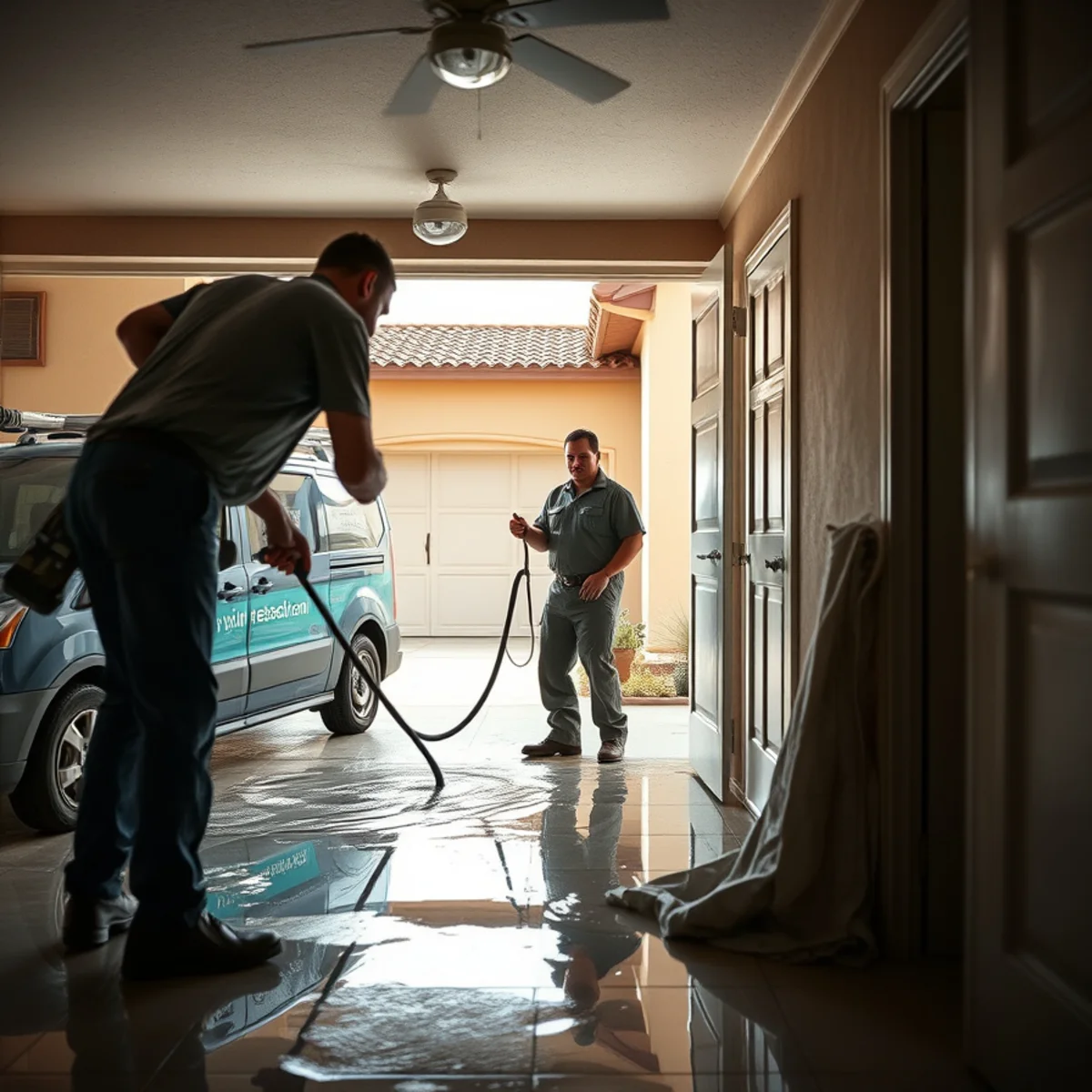
We pull the standing water fast with truck-mounted extraction. A full tank’s worth of water spreads farther than most people expect, so we clear it before it wicks into adjoining rooms or down to a lower floor.
We follow the water with moisture meters and thermal imaging. From a garage it runs under walls into the house; from an attic it comes down through the ceiling and inside the wall cavities, so we map the full path, top to bottom.
We set LGR dehumidifiers and air movers, open and dry wet wall cavities, and address soaked insulation — which loses its R-value and holds moisture — drying everything to a verified standard with daily monitoring.
A failed tank almost always needs replacing, not repairing. We work around your plumber’s install so the new unit goes in and we can finish drying and restoration without the two trades stepping on each other.
Once it is dry, we repair what the flood damaged — ceiling drywall under an attic unit, wall texture and paint, and flooring — so there is no lingering sign of the failure.
Water heaters do not last as long in the Valley as they do elsewhere, and hard water is the reason. Arizona’s water runs 16 to 25 grains per gallon, and all those minerals settle as sediment in the bottom of the tank, where they bake against the burner or element, corrode the lining, and slowly cook the tank from the inside. That popping sound a heater makes is sediment — an early warning the tank is wearing out ahead of schedule.
Where the heater sits decides how bad the flood gets. A garage tank floods the garage and often wicks under the wall into the house. A closet unit soaks the surrounding rooms. An attic heater is the worst case — when it fails, 40 to 80 gallons come straight down through the ceiling into the living space, which is why builders put a pan and drain under them and why those defenses so often fall short. We dry all three, but the attic failures need the most cavity and ceiling work.
On insurance: a sudden tank burst is generally treated as sudden and accidental and is usually covered, while a heater that was visibly weeping for months and ignored can be called maintenance. We document the failure and the resulting damage from the first minute. (General guidance, not a coverage decision — your policy controls.)

We never quote a scary number over the phone. After a free on-site assessment you get a clear estimate. These are the factors that move the price:
We answer 24/7 and dispatch immediately, with a 60-minute response target across the south-side Valley.
Our yard sits on Auto Drive in 85284 near the I-10 Broadway Curve — not a call center three states away.
IICRC-certified crews following the S500 drying standard, with documentation your adjuster expects.
Extraction, drying, and full repair under one roof — you never juggle multiple contractors.
We document every reading and photo and work directly with your carrier to keep the claim moving.
We monitor moisture daily and prove the structure is dry — the real way to stop mold.
Potentially serious, because gravity is working against you. A failing attic tank sends its water down through the ceiling and into the walls below, so the damage is rarely limited to one spot. Shut off the water and the tank’s power or gas, and call us — we will trace and dry the full path.
Close the cold-water supply valve on top of the tank, or shut off your main if you cannot reach it. Then cut the unit’s power at the breaker, or turn its gas valve off, so it is not heating while it drains. That stops the flood and makes the tank safe to work around.
We focus on the water damage — extraction, drying, and restoration — and coordinate with your plumber on the new tank. A failed heater almost always gets replaced rather than repaired, and we time our work around the install.
Hard water is usually the culprit here. At 16 to 25 grains per gallon, Arizona water builds sediment that corrodes the tank from the inside and shortens its life. It is why Valley heaters often fail earlier than the warranty would suggest.
Watch its age and listen for popping or rumbling — that sediment sound means hard water is wearing the tank out early, often before the warranty is up. Keeping it in a drain pan with a routed drain line, and replacing an aging tank before it fails, prevents most of these floods. If yours does let go, we answer 24/7 with a 60-minute response target.

Water heaters usually sit in the garage in Arizona, and when the tank lets go it releases 40 gallons or more at once. Move fast and in the right order to limit the damage.

Most water heaters last a decade. In Arizona’s hard water, many fail in six to eight years. Here is what the minerals do inside the tank — and how to see it coming.
When you call, a real person answers and a crew is dispatched immediately — with a 60-minute response target across South Tempe, Ahwatukee and Chandler.