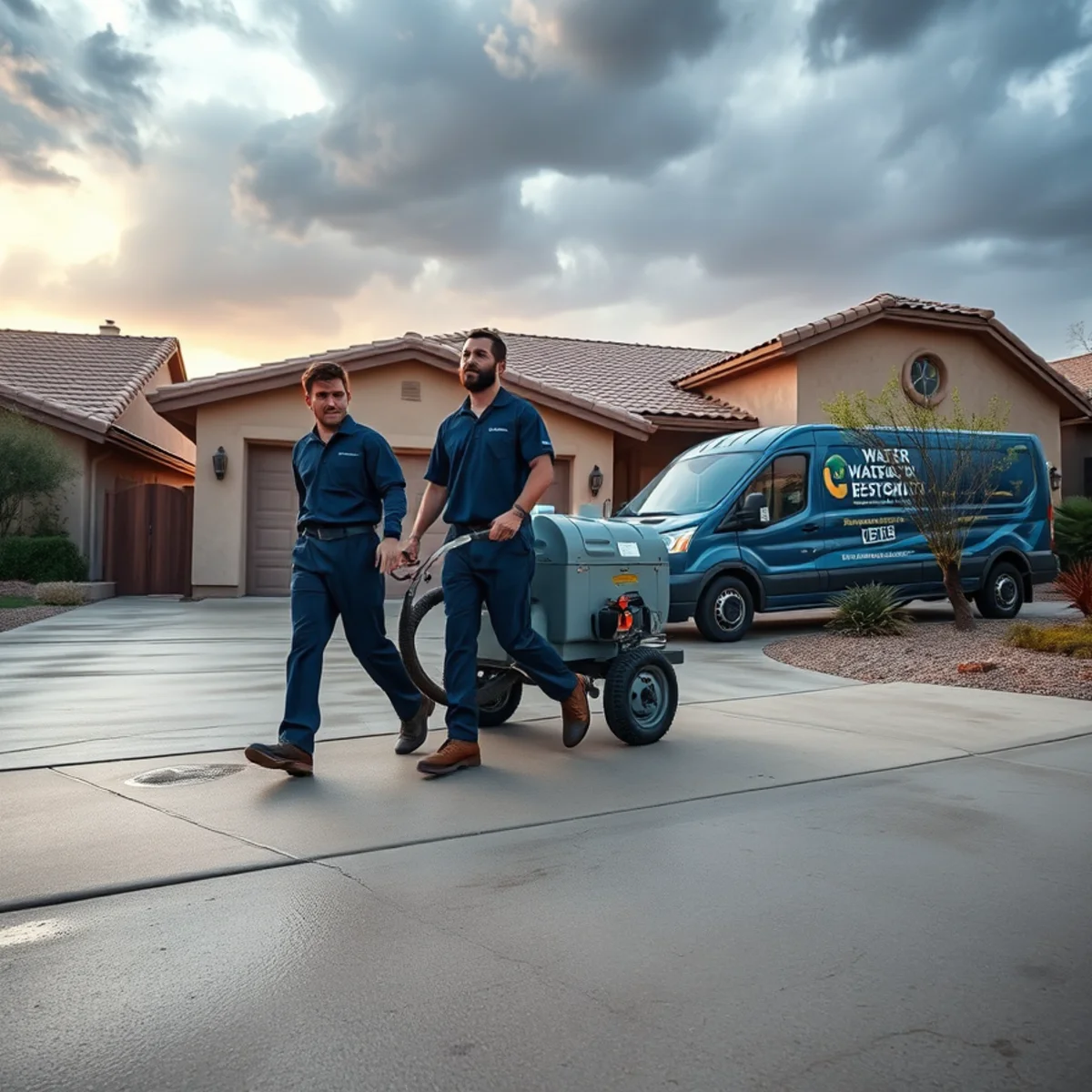
Flooded home or a leak spreading through the walls? We answer 24/7 and dispatch fast from our Auto Drive yard off I-10 — serving all of Tempe, Ahwatukee, Chandler and the south-side Valley.
One team, five clear steps — built on the IICRC S500 standard, from the first call through the final repair.
1
Call & Dispatch — within 60 min
A real person answers 24/7. We ask a few quick questions and roll a crew immediately, with a 60-minute response target across the south-side Valley.
2
Assess & Extract
We map the damage with moisture meters and thermal imaging, then pull standing water fast with truck-mounted extraction — including the water hiding in walls and under floors.
3
Dry & Dehumidify
LGR dehumidifiers and air movers dry the structure to a verified standard under the IICRC S500 protocol. We monitor moisture daily, so drying is proven — not guessed.
4
Clean & Sanitize
We clean, disinfect, and deodorize affected surfaces, with antimicrobial treatment where a contaminated-water loss calls for it.
5
Restore & Repair
We put your home back — drywall, baseboards, paint, flooring, and any reconstruction — so you work with one team from the first call to the final walkthrough.
Know the Signs
Common causes of water damage in Tempe homes
Arizona homes fail in specific ways. Here’s what to watch for — and what to do first — for the losses we see most.
Signs: Sudden flooding, or slow damage behind walls in older copper and polybutylene lines.
Do first: Shut off the main valve, photograph everything, and call for burst pipe cleanup.
Not sure what you’re dealing with? Send us a photo or call and we’ll help you figure it out.
Local Expertise
Tempe monsoon & Salt River flood risk
Tempe sits along the Salt River, and monsoon season — June 15 through September 30 — brings short, violent storms that overwhelm the drains. Low blocks near the river and Tempe Town Lake, streets with drainage bottlenecks, and homes near the washes take on water fast. Haboobs make it worse, clogging the scuppers that are supposed to drain flat roofs.
September 2014 dropped a 100-year-plus storm on the Valley and triggered a county-wide state of emergency. We built our crews and equipment around exactly this risk — read our Tempe monsoon flood survival guide or call the moment water starts rising.
Clear gutters, downspouts, scuppers, and yard drainage paths.
Flush and clear your AC condensate line before the heat peaks.
Find your main water shut-off valve — before you need it at 2 a.m.
Keep an emergency kit and our number within reach.
Why South Tempe Homeowners Call Us First
60-Minute Response
We answer 24/7 and dispatch immediately, with a 60-minute response target across the south-side Valley.
Truly Local
Our yard sits on Auto Drive in 85284 near the I-10 Broadway Curve — not a call center three states away.
Licensed & Insured
IICRC-certified crews following the S500 drying standard, with documentation your adjuster expects.
One Team, Start to Finish
Extraction, drying, and full repair under one roof — you never juggle multiple contractors.
Insurance-Claim-First
We document every reading and photo and work directly with your carrier to keep the claim moving.
Dry to a Verified Standard
We monitor moisture daily and prove the structure is dry — the real way to stop mold.
4.9
127+ verified Google reviews
Locally Owned & Operated
Your neighbors on Auto Drive — not a national call center
We live and work in South Tempe. Our yard sits in 85284 near the I-10 Broadway Curve, so when your home floods at 2 a.m., a real local crew is on the way — not a dispatcher three states away routing the job to whoever is closest.
IICRC-certified technicians following the S500 drying standard
Insurance-claim-first documentation your adjuster expects
We document the loss from the first minute — photos, moisture readings, and a full scope — and talk to your adjuster directly, so the claim keeps moving. Because insurers recognize IICRC-certified mitigation, our S500 documentation is exactly what they expect to see.
Sudden, accidental damage — a burst pipe or a failed water heater — is usually covered.
Gradual leaks left unaddressed are often treated as a maintenance issue.
Rising storm or flood water typically needs separate flood insurance.
“Woke up to warm, wet tile in the hallway — a slab leak. I called around 5 a.m. and someone actually answered. A crew was extracting water within the hour and had dryers running before lunch. They found moisture two rooms over that I never would have caught. No mold, and the floor came back perfect.”
Marcus Delgado
Warner Ranch, South Tempe · Slab Leak Cleanup
July 18, 2026
“A monsoon microburst pushed water under our garage door and into the media room. These folks knew exactly how the runoff moves on our street. Fast, calm, and they photographed everything for our insurance. The adjuster said it was the cleanest documentation he had seen all season.”
Priya Nair
Ahwatukee Foothills · Monsoon Flood Cleanup
July 2, 2026
“Polybutylene line let go behind the laundry wall while we were at work. Water everywhere. They helped me find the shutoff over the phone, then handled extraction and drying and coordinated the plumber. One team, no runaround. Would call them again in a heartbeat.”
Greg Halvorsen
Ocotillo, Chandler · Burst Pipe Cleanup
June 24, 2026
“Dishwasher supply line failed overnight and flooded the kitchen and into the dining room. The response time was real — under an hour. They dried the hardwood in place with floor mats instead of tearing it out, which saved us thousands. Professional and honest the whole way.”
Sandra Whitfield
The Lakes, Tempe · Water Extraction
June 9, 2026
“A supply line broke in our shop off Auto Drive on a Saturday. They were here in about twenty minutes since they are right in the corridor. Dried it overnight with commercial equipment and we opened Monday like nothing happened. Minimal downtime, exactly what they promised.”
Tony Marchetti
Kyrene Corridor, Tempe · Commercial Water Damage
May 28, 2026
“Older ranch home, original copper in the slab finally sprung a pinhole leak. The crew was knowledgeable about homes our age and explained every moisture reading. Took a day longer than first estimated because the drywall held more water than expected, but they kept us informed and got it right.”
Deborah Klein
Corona del Sol, South Tempe · Structural Drying
May 15, 2026
“Sewer backed up into our downstairs bathroom — awful. They treated it like the hazard it was: containment, full disinfection, the works. No lingering smell, and they walked us through the insurance side. Grateful they answer 24/7 because this was not a wait-until-morning situation.”
James Okafor
Mountain Park Ranch, Ahwatukee · Sewage Backup Cleanup
April 30, 2026
“Ceiling stain under the attic air handler turned into a real leak in July. They found the clogged condensate line fast, dried the ceiling cavity, and repaired the drywall so you cannot tell anything happened. Added a float switch so it will not happen again. Smart, tidy work.”
A stack line runs through several condos, so when it leaks, so does the question of who pays. Here is how Arizona CC&Rs and master policies generally sort HOA and owner responsibility.
A leak you leave wet can become a mold problem you own. Here is how Arizona’s landlord-tenant framework generally treats habitability, tenant notice, and your duty to fix water damage promptly.
When water hits a business in the Kyrene corridor, the meter that matters is downtime. Here is how phased extraction, drying, and after-hours crews get you back open with less lost revenue.
How fast can you respond to a water emergency in South Tempe?
We answer 24/7 and target a 60-minute response across Tempe, South Tempe, Ahwatukee, and Chandler. Our crews stage on Auto Drive near the I-10 Broadway Curve, so most of the south-side Valley is a short drive day or night.
Do you work with my insurance company?
Yes. We document the loss from the first minute — photos, moisture readings, and a full scope — and communicate directly with your adjuster. Our IICRC-standard documentation is what carriers expect, which keeps claims moving.
Will my homeowners insurance cover the water damage?
Usually, sudden and accidental damage like a burst pipe or a failed water heater is covered, while gradual leaks left unaddressed may be treated as maintenance. Rising storm or flood water typically needs separate flood insurance. This is general information — we help you document the loss so the right coverage can be applied.
How much does water damage restoration cost?
It depends on the category of water, how much area is affected, how long the water sat, and the materials involved. We give a transparent estimate after an on-site assessment and never quote a scary number over the phone. The initial inspection is free.
How long does water damage restoration take?
Water extraction usually happens the same visit, and structural drying typically runs three to five days depending on how much water penetrated and which materials are involved. We dry to a verified standard and monitor moisture daily, then handle any repairs. You get a clear timeline right after our first assessment.
What’s the difference between water mitigation, restoration, and reconstruction?
Mitigation is the emergency response — stopping the source, extracting the water, and drying the structure to prevent more damage. Restoration returns your home to its pre-loss condition. Reconstruction rebuilds structural elements that were too damaged to save. We handle all three under one roof, so you never juggle multiple contractors.
How quickly can mold start after a leak?
In Tempe’s heat, mold can begin within 24 to 48 hours. That is why we push to start extraction and drying the same visit and dry the structure to a verified standard rather than guessing when it is done.
Are you licensed and insured?
Yes. We are locally owned, licensed and insured, and our technicians follow the IICRC S500 water damage standard. We are happy to share our credentials before any work begins.
What areas do you serve?
We are based in South Tempe (85284) and focus on Tempe, Ahwatukee, Chandler, Guadalupe, and south Mesa and Gilbert, with county-wide response across Maricopa County for larger losses.
What should I do while I wait for your crew?
If it is safe, shut off the water at the main valve and cut power to wet areas at the breaker. Photograph and video everything before cleanup, lift belongings off wet floors, and skip the household vacuum on standing water. Call us and we will walk you through the rest.
60-Minute Emergency Response
Water Damage? We’re Ready 24/7.
When you call, a real person answers and a crew is dispatched immediately — with a 60-minute response target across South Tempe, Ahwatukee and Chandler.