Monsoon Season in Tempe (June 15–Sept 30): A Home Flood Survival Guide
Tempe’s monsoon runs from June 15 to September 30, and the worst storms give almost no warning. This guide covers how to ready your home, what to do mid-storm, and who to call.


When a monsoon storm or a failed appliance floods your Tempe home, we handle the whole mess — pump-out, muck-out, sanitizing, and drying. Call 24/7 for a 60-minute response target across South Tempe and the Valley.
You open the door and your home is under water. Maybe a monsoon cell dumped an inch of rain in twenty minutes and the yard drained straight through the house. Maybe a washer hose burst while you were out and ran for hours. Either way, you are standing in a flooded home, looking at soaked furniture and floating belongings, and it is hard to know where to even start.
A flood is more than water — it is what the water carries and leaves behind. Storm flooding brings mud, silt, debris, and whatever was on the ground outside, which makes it contaminated from the first minute. It saturates everything low: carpet, drywall, cabinets, and boxes stored on the floor. And it does not politely wait. In Tempe’s heat, mold can take root in a day or two, and one inch of water across a home can cause around $25,000 in damage. A flooded house is a clock that started the moment the water came in.
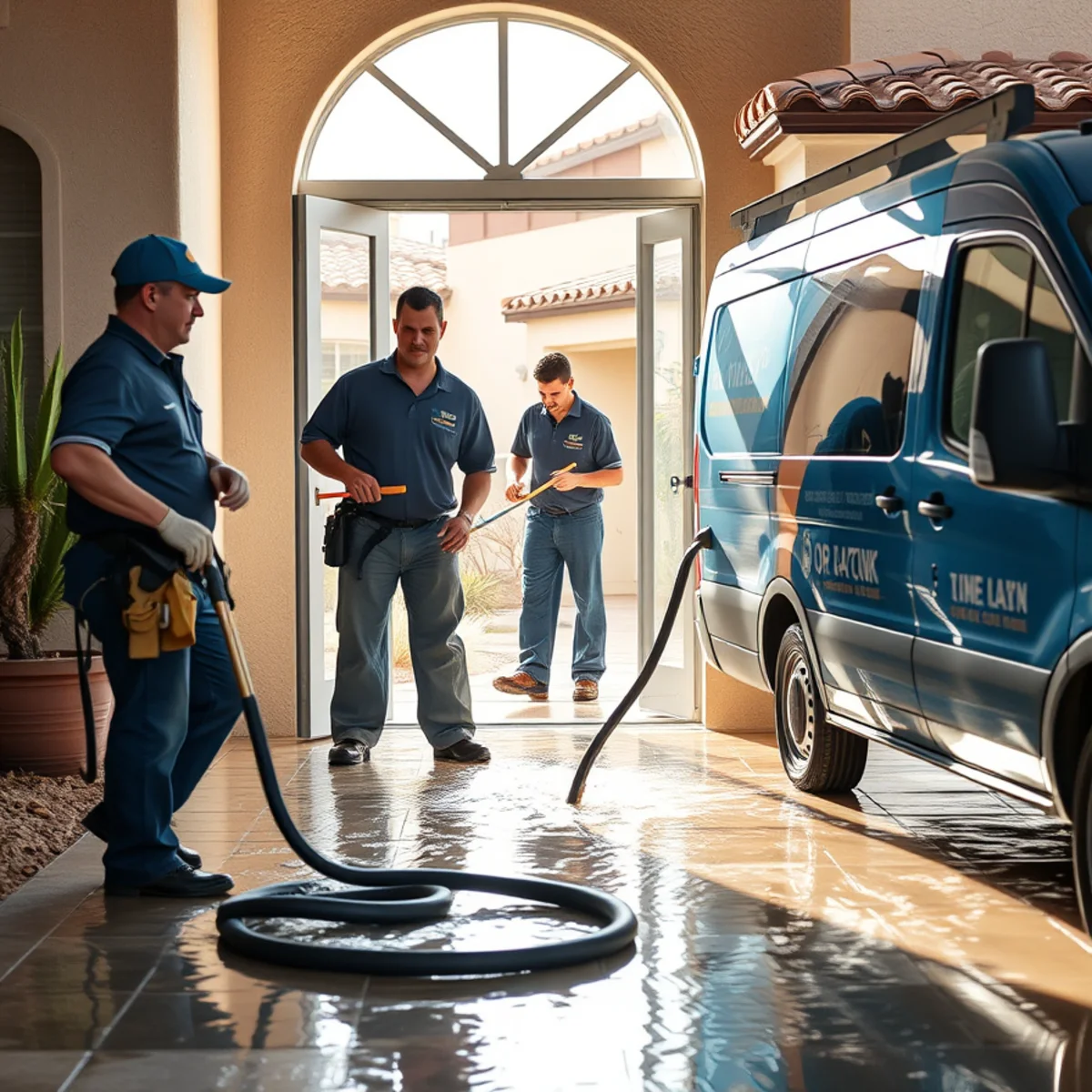
We clean up floods for a living and take the whole event off your hands. From our yard off I-10, we roll out with pumps and extraction trucks, clear the water and the muck, sort and protect what can be saved, and sanitize what the flood contaminated. Then we dry the structure so the problem does not come back as mold. A real person answers your call any hour — during monsoon season, that matters.

Every flood cleanup job covers the full scope — one crew from the first pass to the last moisture reading.
Active water emergency right now?
We answer 24/7 — a real person, not a machine.
A flood touches the whole house, so cleanup is far more than pumping water. Here is how we take a flooded Tempe home back to dry and clean.
We check for electrical and structural hazards first, identify the water source, and determine how contaminated the flood water is. Storm and ground water is treated as unsanitary, which shapes everything that follows.
Submersible pumps clear the deep water and our extraction trucks pull out the rest. Getting the volume out fast is what stops the flood from climbing higher into walls and furniture.
Floods leave mud, silt, and ruined material behind. We remove soaked carpet and pad, waterlogged debris, and unsalvageable contents, then haul it away to reach the structure underneath.
We sort belongings into what can be cleaned and what cannot, move salvageable items out of harm’s way, and document losses for your claim as we go.
Because flood water is contaminated, we clean and disinfect the surfaces it touched, apply antimicrobial treatment where needed, and knock down the musty flood odor rather than masking it.
Finally, we dry the home with dehumidifiers and air movers to a verified standard, so the moisture a flood drives into walls and floors does not return as mold weeks later.
Tempe’s flood risk peaks with the monsoon, roughly June 15 through September 30. Dry desert ground does not absorb a sudden downpour, so runoff sheets across yards and streets and finds the lowest way in — usually a door threshold or the garage. Most Tempe homes sit slab-on-grade, so once water is inside it spreads sideways fast and soaks the bottom of every wall it reaches. We know how this water moves here and plan the cleanup around it.
Insurance is where a lot of flood victims get an unwelcome surprise. As a general rule, a sudden and accidental indoor flood — a burst hose or a failed appliance — is usually covered by a standard homeowners policy. But rising water that comes from outside, the kind a monsoon storm brings, is typically not covered without a separate flood policy. That distinction catches people off guard every summer. We document the source and the damage thoroughly either way so you can make the strongest possible claim. (This is general information, not coverage advice — your own policy decides.)
Speed changes a flood’s outcome more than anything else. The faster the water and muck are out and the drying is running, the more flooring, drywall, and belongings survive — and the smaller the mold risk. That is why we keep crews ready around the clock through storm season and reach flooded Tempe homes fast.

We never quote a scary number over the phone. After a free on-site assessment you get a clear estimate. These are the factors that move the price:
We answer 24/7 and dispatch immediately, with a 60-minute response target across the south-side Valley.
Our yard sits on Auto Drive in 85284 near the I-10 Broadway Curve — not a call center three states away.
IICRC-certified crews following the S500 drying standard, with documentation your adjuster expects.
Extraction, drying, and full repair under one roof — you never juggle multiple contractors.
We document every reading and photo and work directly with your carrier to keep the claim moving.
We monitor moisture daily and prove the structure is dry — the real way to stop mold.
Yes. We answer live 24/7 and keep crews on standby through monsoon season, June 15 to September 30. We target a 60-minute response across Tempe, South Tempe, Ahwatukee, and Chandler, though a major storm can stretch drive times valley-wide.
Often not. Standard policies usually cover sudden indoor floods like a burst hose, but outdoor storm and rising water typically needs a separate flood policy. We document everything so your claim is as strong as it can be. Your own policy has the final word — this is general information, not coverage advice.
It depends on how contaminated the water was and how long it sat. A clean-water flood caught early often means we can save carpet and many contents. Storm and ground water is treated as contaminated, so soaked porous materials usually have to go for health reasons. We sort it and tell you straight.
If it is safe, cut power to the flooded area at the breaker and stay out of standing water near outlets. Move small valuables and pets to a dry room, and photograph the flood before you touch anything. Then call us — do not run a household vacuum over flood water.
Flood odor lives in the soaked materials and the damp air, so we neutralize it at the source instead of masking it with fragrance — removing porous materials the water ruined, disinfecting surfaces, and drying the structure fully. Air scrubbers help clear the smell as we work. Lingering odor usually means moisture is still trapped, which is why we dry to a verified standard and answer 24/7 to get that drying started fast.

Tempe’s monsoon runs from June 15 to September 30, and the worst storms give almost no warning. This guide covers how to ready your home, what to do mid-storm, and who to call.

When a monsoon storm floods your home, your homeowners policy may not be the one that pays. Here is how flood coverage really works across Maricopa County — and what to do first.
When you call, a real person answers and a crew is dispatched immediately — with a 60-minute response target across South Tempe, Ahwatukee and Chandler.