That musty, damp-basement smell after a leak is trying to tell you something. It means moisture is still trapped somewhere in the room, and mold or mildew has already started feeding on it. An air freshener or a scented candle will cover the odor for an afternoon, but it does nothing to the source. The smell comes back because the water never left.
The odor itself is not mold spores. It is a group of gases that mold and mildew give off as they grow, called microbial volatile organic compounds, or MVOCs. Your nose is picking up the byproduct of something alive behind a wall or under the floor. That is useful: the smell is an early-warning system pointing you toward wet material you cannot see.
In Tempe that warning matters more than in most places. Our heat can push mold from a few spores to a visible colony in 24 to 48 hours, so by the time a room smells musty, the clock has been running a while. Here is what causes the smell, where the moisture hides, and how a crew clears it for good — in that order, because the order is the point.
Key Takeaways
- A musty smell after water damage means moisture is still trapped and mold or mildew is actively growing — not just a stale room.
- The odor is MVOCs, gases released during microbial growth, so it keeps returning until the water and the growth are gone.
- Air fresheners, candles, and ozone sprays only mask the smell and hide the warning; they fix nothing.
- The water usually hides in wall cavities, carpet pad, subfloor, HVAC ducts, and behind cabinets, where surfaces feel dry but the core is soaked.
- Deodorizing works only after moisture mapping, structural drying, and removing ruined materials — in that exact order.
What actually causes the musty smell
A musty smell needs two things at once: something organic to feed on, and moisture to wake it up. Mold spores are already in every home, floating and settled, doing nothing. They activate only when a surface stays damp long enough. Give them water and a food source and they grow — and growing is what produces the smell.
The food source is almost always ordinary building material. Once any of it stays wet, it is a meal. As the colony grows it releases MVOCs, the earthy, sour gases you are smelling. So a persistent musty odor is a simple equation: active growth means an active food source means water that is still there.
- Drywall and its paper facing
- Wood framing, subfloor, and trim
- Carpet, carpet pad, and the glue under flooring
- Insulation inside wall cavities
- Dust and debris inside HVAC ducts
Why masking the smell always fails
Air fresheners, scented candles, plug-ins, baking soda, and the ozone sprays sold at the hardware store all work on the air in the room. The colony producing the odor is not in the air. It is in the wall cavity or under the carpet, and it keeps releasing MVOCs as long as it has moisture. Perfume the air all day and the smell returns the moment the fragrance fades.
There is a second cost to masking it. The odor is the one signal that something is wrong behind the surface. Cover it up and the damage spreads silently — the drywall keeps wicking, the mold keeps expanding, and a repair you could have kept small grows by the week. The only thing that ends a musty smell is removing the moisture and the growth it feeds.
Active water emergency right now?
We answer 24/7 — a real person, not a machine.
Where the moisture hides
After a leak, the surfaces you can see dry first. A wall feels dry to the hand while the cavity behind it is still soaked — drywall wicks water upward, paint seals it in, and in a slab-on-grade Tempe home it spreads flat under the flooring before it ever shows. That gap between what you can touch and what is wet is where the smell lives.
These are the spots we find trapped moisture again and again. If a room smells musty but looks fine, the water is almost always in one of them:
- Inside wall cavities behind the drywall
- Under and behind baseboards, where water pools first
- In the carpet pad, the sponge that holds water long after the carpet feels dry
- Under the subfloor, vinyl, laminate, or tile
- Inside HVAC ducts and the air handler, which spread the smell room to room
- Behind and under cabinets, especially kitchen and bath toe-kicks
How professionals find and fix it
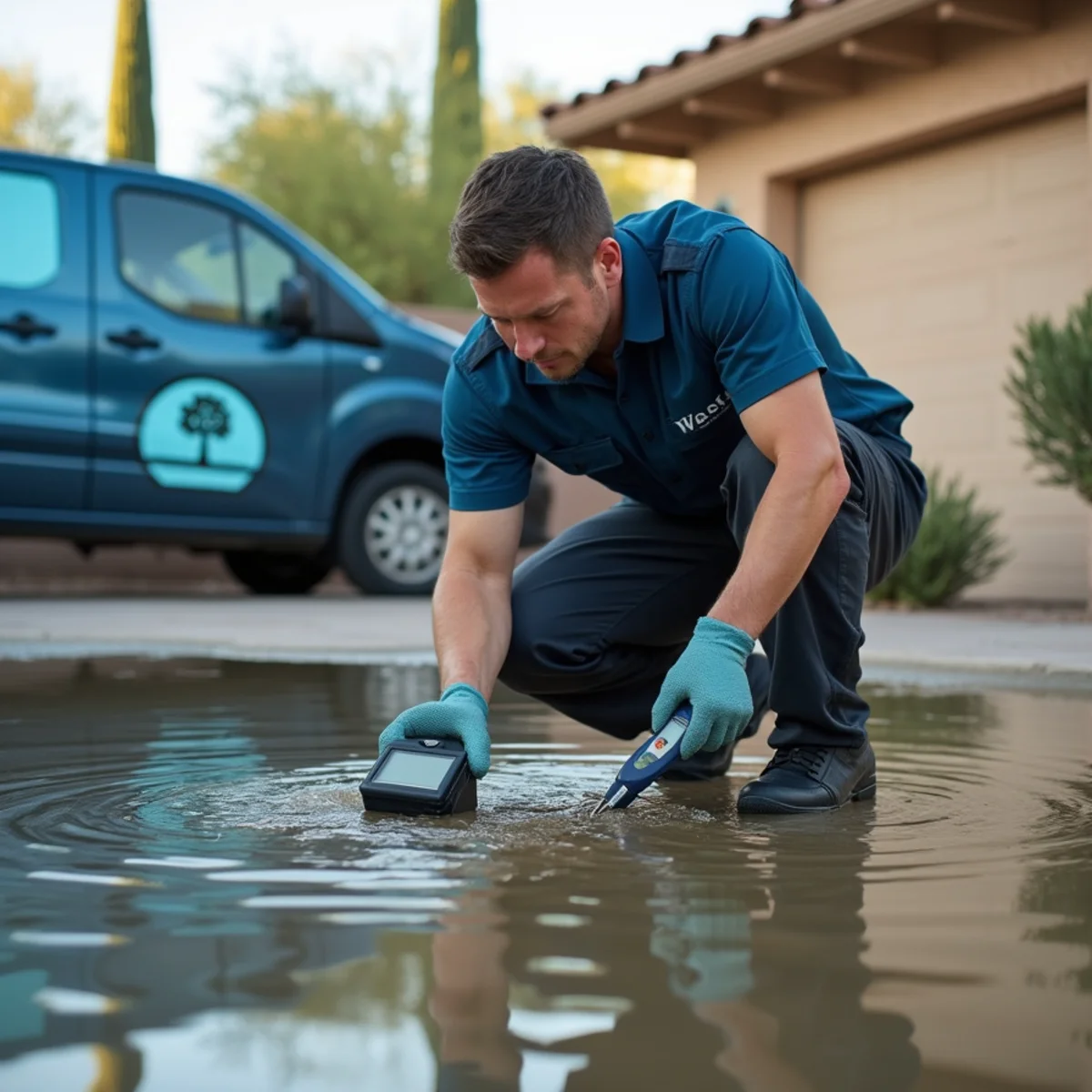
The job runs in one direction: moisture first, odor last. A crew starts by finding the water, not by spraying anything — moisture meters and thermal imaging map where the material is wet and how far the water traveled, so the drying targets the real problem instead of guessing.
From there the sequence is straightforward, and every step has to happen before deodorizing even makes sense:
Deodorizing a room that is still wet only traps the smell to return. Once the structure is dry and the ruined material is gone, the odor often drops on its own, and whatever is left responds to treatment. Do it in the wrong order and you are perfuming a problem that is still growing.
- Map the moisture with meters and thermal imaging to find every wet area and its edges
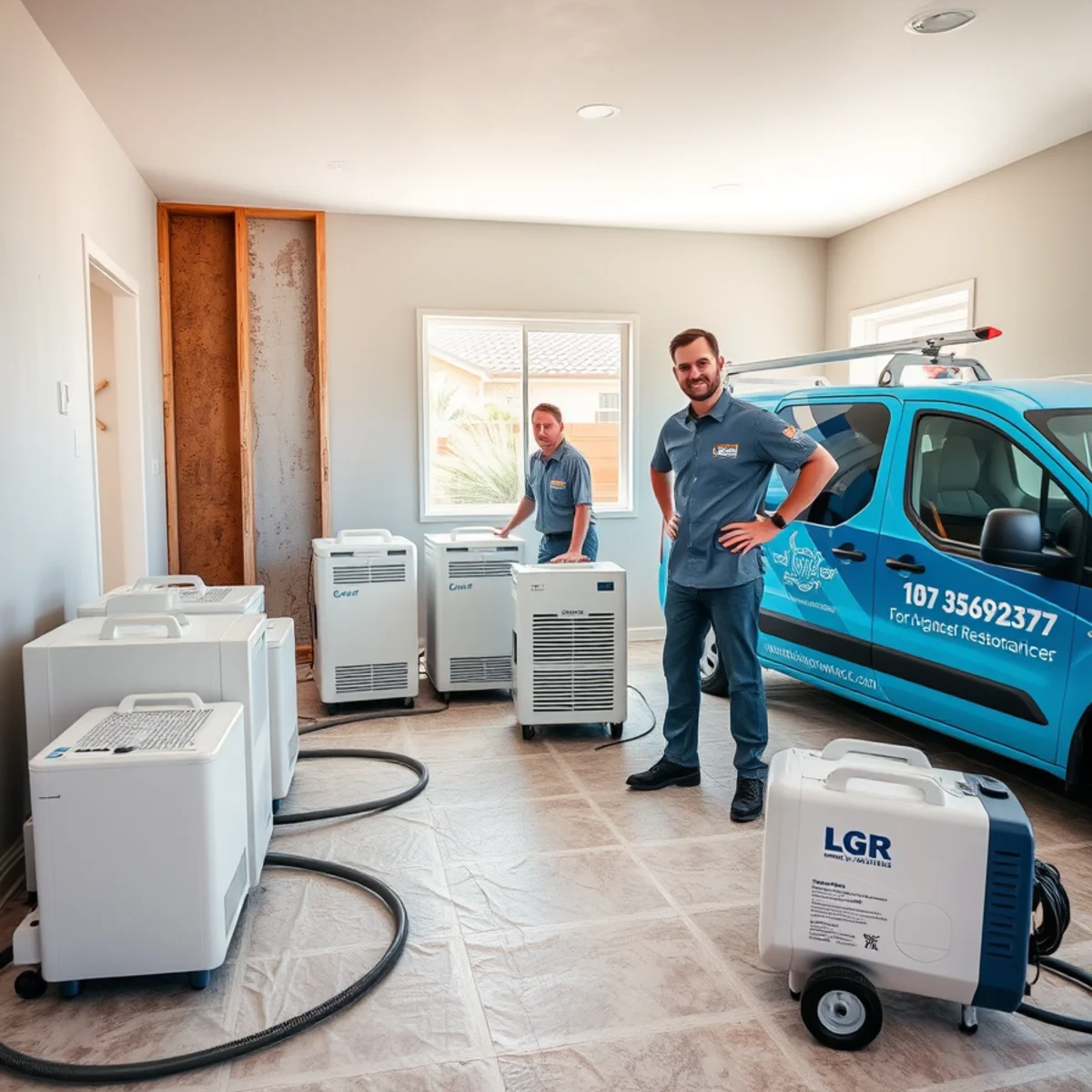
- Dry the structure to the IICRC S500 standard, opening wall bases or pulling baseboards where a cavity holds water
- Remove material too saturated to save — soaked carpet pad, swollen particleboard, mold-damaged drywall
- Only then deodorize, using HEPA air scrubbing and odor treatment on dried, cleaned surfaces
When a musty smell means mold — and you should test
A faint smell right after a spill that clears as things dry is one thing. A musty smell that lingers, or fades and comes back, usually means a colony is established out of sight. A few signs point that way: discoloration creeping up a baseboard or ceiling, the odor being strongest near the floor or in a closet, or allergy-type symptoms that ease when you leave the house and return when you come home.
Testing makes sense when the smell persists but nothing is visible, when someone in the home has asthma or allergies, or when you are buying or selling. Air sampling and surface swabs tell you the type and extent of the growth. What testing cannot do is dry anything or remove the source, so pair it with finding the moisture. A test confirms the problem; drying and removal fix it.
The Arizona angle: why the clock runs faster here
People assume our dry climate protects them from mold. Inside a wet wall it does the opposite. Heat speeds microbial growth, and a soaked cavity in a Tempe summer is warm and humid regardless of what the air outside is doing. That is why mold can take hold within 24 to 48 hours here, faster than many homeowners expect.
Monsoon season, from mid-June through late September, stacks the odds. Humidity spikes, haboobs drive fine dust into every gap, and that dust becomes another food source once it gets damp. Add slab-on-grade construction that wicks water up the walls and AC condensate lines that quietly overflow, and a musty smell in a Valley home is rarely just old-house smell. Treat it as an active leak until proven otherwise.
If a room has gone musty and will not quit, do not wait a week to see if it airs out. We answer 24/7 across Tempe, Ahwatukee, Chandler, Mesa, Gilbert, and Scottsdale, target a 60-minute response, and run the whole job as one crew — from the first moisture reading through drying, removal, and rebuild. A free on-site assessment finds where the water is hiding before the smell becomes a gutted wall.
Frequently Asked Questions
Will a musty smell go away on its own?
Not while the moisture that feeds it is still there. The growth producing the odor needs water, and water trapped in a wall cavity or carpet pad can sit for weeks without drying. The smell leaves only when the material is dried or removed. If it keeps fading and returning, the source is still wet.
Does a musty smell always mean mold?
Not always, but it almost always means moisture, and in Arizona heat moisture and mold arrive close together. Surface mildew and bacteria give off similar odors, and so can wet dust in a duct. A lasting musty smell means something is still damp, and damp material here grows mold fast. Find the moisture first.
How do professionals get rid of musty smell?
Source first, odor last. We map the moisture with meters and thermal imaging, dry the structure to the IICRC S500 standard, and remove any material too saturated to save. Only once the space is dry do we deodorize with HEPA air scrubbing and odor treatment. Deodorizing a wet room just traps the smell to come back.
Can I just paint or seal over the smell?
Sealing over damp, musty drywall locks the moisture and growth behind the paint, where it keeps spreading and the odor bleeds back through. Sealers have a place, but only on material that has already been dried and cleaned. On a wet wall, paint buys you a few days, not a fix.