
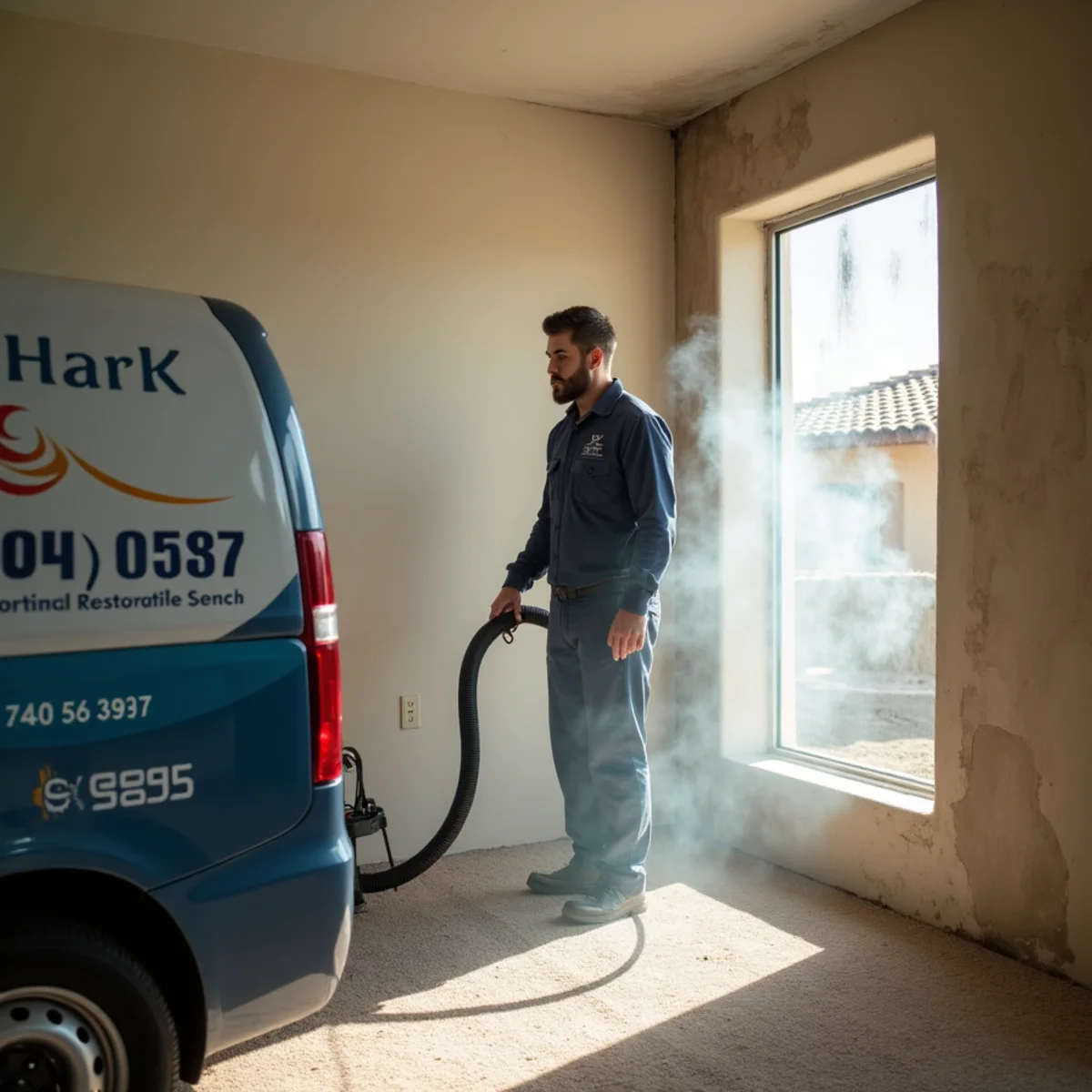
Here is the hard truth first: you cannot cover your way out of smoke smell. Air fresheners, candles, and sprays only mask it for an afternoon, because the odor is not really in the air — it lives in the soot residue coating every surface and in the porous materials that drank the smoke in. To get rid of smoke smell after a fire for good, you remove it at the source, clean the soot off hard surfaces, and then neutralize whatever is left with professional deodorization. There is no shortcut around those steps.
Smoke is not a single smell. It is thousands of microscopic particles and gases left behind when things burn — plastics, wood, fabric, insulation, food. They settle as soot and sink into drywall, carpet, upholstery, wood trim, and ductwork, where they keep releasing odor for weeks or months. That is why a room can look clean and still smell like a fire every time the house warms up or the AC runs.
This guide covers why the smell lingers, why the usual home remedies fail, what actually removes it, and what you can safely handle versus when it needs equipment. There is also an Arizona wrinkle: the water used to put the fire out can add a musty, moldy layer on top of the smoke if it is not dried fast — and in our heat, fast means a day or two.
Key Takeaways
- You cannot mask smoke smell — the odor lives in soot residue and porous materials, so it has to be removed at the source, not covered up.
- Air fresheners, candles, and vinegar only treat the air; they do nothing for odor soaked into drywall, fabric, wood, and ducts.
- Real removal runs in order: take out unsalvageable porous materials, HEPA-clean the soot, then deodorize with thermal fogging, hydroxyl, or ozone.
- Clean the HVAC and ducts, or the system blows the smell back into the house every time it runs.
- In Arizona, firefighting water can add a musty, moldy odor within 24 to 48 hours, so the water has to be dried as fast as the smoke is cleaned.
Why the smell lingers long after the fire
Smoke smell sticks around because the source is still in the house. When something burns, it throws off fine, oily particles and a cloud of odor-carrying gases. The particles settle everywhere as soot; the gases absorb into anything porous. Your nose keeps smelling the fire because, in a chemical sense, it is still coating your walls and soaked into your couch.
Porous materials are the problem. Glass and glazed tile hold soot on top, where it wipes off. But drywall, bare wood, grout, carpet, fabric, mattresses, and insulation pull the odor deep inside, the way a sponge pulls in water — and the heat of the fire opens those pores and drives the smoke in further. The odor is embedded, not resting on the surface.
The HVAC system makes it worse. Once the air handler runs, it pulls smoke through the return, coats the coil and ductwork with soot, and blows that smell into rooms the fire never reached.
- Soot settles into drywall, grout, bare wood, and concrete
- Fabrics soak it up — upholstery, curtains, carpet, mattresses, clothing
- Insulation inside walls and attics traps and holds the smell
- HVAC coils and ducts collect soot, then recirculate the odor
Why air fresheners, candles, and vinegar fail
Every drugstore fix works on the air in the room, and the air is not where the smell is. An air freshener or candle lays a second fragrance over the smoke for a few hours. Once it burns off, the soot in your walls and upholstery is still there, still releasing odor, and the smell returns. You have spent money to delay the problem, not solve it.
Vinegar gets recommended constantly, and it has real limits. Wiping a hard, washable surface with a vinegar solution can lift light residue, so it is not useless. But it does nothing for odor soaked into drywall, wood, fabric, or insulation, and it cannot touch what is in your ducts. Bowls of vinegar left around a room barely register — it is a mild surface cleaner, not a deodorizer that reaches the source.
Baking soda, coffee grounds, and canned ozone sprays are the same story. They mask or lightly absorb at the surface and never reach the soot in porous materials, which is what smoke odor actually requires.
Active water emergency right now?
We answer 24/7 — a real person, not a machine.
What actually works: remove the source first
Real smoke-odor removal runs in a strict order, and the order is everything. You cannot deodorize your way past soot that is still in the house. The first job is to remove the source — the ruined porous materials, and the soot on everything that stays.
Some materials cannot be saved and should come out, because they hold the smell no matter what you spray on them. Heavily smoke-soaked, porous items are usually cheaper to replace than to chase:
What stays gets cleaned, not perfumed. A crew HEPA-vacuums loose soot first so wiping does not grind it in, then cleans surfaces with the right method for the residue. Done properly, this removes most of the odor, because most of the odor leaves with the soot. Only then does deodorizing make sense.
- Charred or smoke-saturated drywall and insulation
- Soaked carpet and carpet pad
- Porous items that took heavy smoke — some upholstered furniture, mattresses, and ceiling tile
Neutralize what is left — and clean the ducts
Once the soot and ruined materials are gone, some odor is still embedded in the structure — in framing, in grout, in the pores of surfaces you kept. This is where professional deodorizing earns its place, because it reaches odor that cleaning cannot. Three tools do most of the work, and a good crew matches the tool to the job:
The HVAC system gets its own attention. The ducts, coil, and blower are cleaned and the filters replaced, so it stops acting as an odor distributor every cycle. Skip this and even a well-cleaned home smells faintly of smoke whenever the AC runs.
- Thermal fogging — a heated deodorizer becomes a fine fog that travels into the same cracks and pores the hot smoke did, pairing with and neutralizing the trapped odor molecules.
- Hydroxyl generators — these produce hydroxyl radicals that break odor molecules apart. They work more slowly but are safe enough to run while people are still in parts of the home.
- Ozone treatment — an ozone generator oxidizes odor at the molecular level and is powerful on stubborn smoke, but the space has to be emptied of people, pets, and plants while it runs, because ozone is not safe to breathe.
DIY versus professional: what you can safely do
There is a real line between what a homeowner can handle and what needs a crew. After a very small, contained incident — scorched food, a tiny stovetop flare that left light odor and no real soot — you can do some of the early work yourself. Ventilate, launder what is washable, and wipe sealed surfaces.
Call a professional when there is visible soot, when the smell has set into walls or ducts, or when firefighting water is involved. Soot is acidic and etches glass, metal, and finishes within hours, and wiping it without the right vacuum and cleaner only grinds it in. Heavy smoke needs containment, HEPA equipment, and the deodorizing tools above, and pushing hard on a job beyond a wipe-down usually turns restorable items into losses.
A plain rule of thumb: if it is more than a light, surface smell you can air out in a day or two, the odor has gone into materials, and that is a professional job.
- Open windows and run fans to air out light odor once the home is cleared as safe
- Launder or dry-clean washable fabrics and clothing promptly
- Wipe hard, sealed surfaces like glass, metal, and glazed tile
- Replace HVAC filters and keep the system off if it smells of smoke
The Arizona angle: smoke plus firefighting water
Here is the part that catches Valley homeowners off guard. Putting out a fire soaks the house, and that water does not just add water damage — it can stack a musty, moldy smell on top of the smoke. Now you are fighting two odors with two causes, and masking either one is hopeless.
Arizona heat speeds it up. Water left in drywall, carpet, and framing can start growing mold within 24 to 48 hours, and a hot, closed-up house after a fire is close to ideal for it. Clean the smoke but ignore the water, and you can clear the fire smell and still have a damp, musty house a week later.
This is where handling both jobs with one crew matters. We dry the firefighting water to the IICRC S500 standard while we clean the soot and deodorize, so the musty layer never sets in. We answer 24/7, target a 60-minute response, and cover Tempe, South Tempe, Ahwatukee, Chandler, Mesa, Gilbert, and Scottsdale. If your home still smells of smoke, or of smoke and mildew together, call (866) 688-0301 for a free on-site assessment.
Frequently Asked Questions
Will smoke smell eventually go away on its own?
Not on its own, and not fully. Light odor from a tiny, contained incident may air out in a few days with ventilation. But smoke from an actual fire leaves soot and odor embedded in drywall, fabrics, wood, and ductwork, and that keeps releasing a smell for months. Until the source is removed and the remaining odor is neutralized, the smell keeps coming back, especially when the house warms up or the AC runs.
Does vinegar remove smoke smell?
Only at the surface, and only a little. A vinegar solution can lift light residue off hard, washable surfaces, so it helps on glass or tile. It does nothing for odor that has soaked into drywall, wood, carpet, or your ducts, and bowls of vinegar sitting out barely register. Treat vinegar as a mild surface cleaner, not a fix for embedded smoke odor.
How long does it take to get rid of smoke smell?
It depends on how far the smoke spread and how porous the affected materials are. A small, contained job with light odor might take a day or two of cleaning and deodorizing. A whole-home smoke event — soot through the structure, into contents and ducts — can take one to several weeks, since it involves removal, cleaning, deodorizing, and often rebuild. A free on-site assessment gives you a realistic timeline for your home.
Does an ozone machine get rid of smoke smell?
An ozone generator can neutralize stubborn smoke odor by oxidizing the odor molecules, and it is a real tool professionals use. The catch is safety and sequence: ozone is not safe to breathe, so the space has to be emptied of people, pets, and plants while it runs and aired out afterward, and it only works properly once the soot and ruined materials are already gone. Running ozone over a house still full of soot just wastes time.
Can I get smoke smell out of clothes and furniture myself?
Washable clothing and fabrics often come clean with prompt laundering or dry cleaning, sometimes more than once. Upholstered furniture and mattresses are harder, because the smell soaks deep into the padding, and heavily smoke-soaked pieces are frequently cheaper to replace than to restore. If an item is valuable, have it assessed before you decide, and keep it out of the smoke-exposed air in the meantime.