There is no honest flat price for fire damage cleanup, and anyone who quotes one sight unseen is guessing. A small, contained fire with light smoke is a modest job. A fire that burned through rooms, pushed smoke through the whole house, and left it soaked with firefighting water is a major one. The cost tracks how big the fire was, how far the smoke and soot traveled, how much water the fire department used, how much of your property was affected, and how much rebuild is needed afterward. This guide gives you broad, honest ranges and the factors behind them — not a fake number.
Keep the ranges here as a rough frame, nothing more. Fire losses vary too much for an internet average to mean anything for your home, which is why the only reliable figure comes from an on-site assessment where someone looks, measures, and writes it down. Ours is free.
Here is what the bill is actually made of, what pushes it up or down, how a small fire compares to a major loss, the water-damage cost most people forget, and where insurance usually fits. One note up front, repeated at the end: this is general information, not legal or coverage advice, and your policy decides what it pays.
Key Takeaways
- There is no flat price for fire damage cleanup — the cost tracks fire size, smoke spread, firefighting water, contents affected, and rebuild needed.
- Reconstruction is usually the biggest line, so a fire that destroyed structure costs far more than one that mostly left smoke.
- Wet, greasy smoke from a smoldering fire is harder and costlier to clean than dry, powdery soot from a fast, hot fire.
- Do not forget the firefighting water — in Arizona heat it can grow mold within 24 to 48 hours and become a second loss if it is not dried fast.
- Fire is a core covered peril, so insurance usually helps; the only reliable figure is a free on-site assessment — call (866) 688-0301.
What you are actually paying for
Fire damage cleanup is not one service. It is a string of them, each with its own labor, equipment, and materials, and a big fire needs all of them while a small one needs only the first few. Seeing the parts makes the total make sense.
On most jobs, the reconstruction is the single biggest line, which is why a fire that destroyed structure costs so much more than one that mostly left smoke. Cleaning and deodorizing a smoky house is a fraction of the cost of rebuilding a burned one.
- Emergency board-up and roof tarping — securing the home the night of the fire, since crews cut roofs and break windows to fight it
- Water extraction and structural drying — removing the firefighting water before it causes its own damage
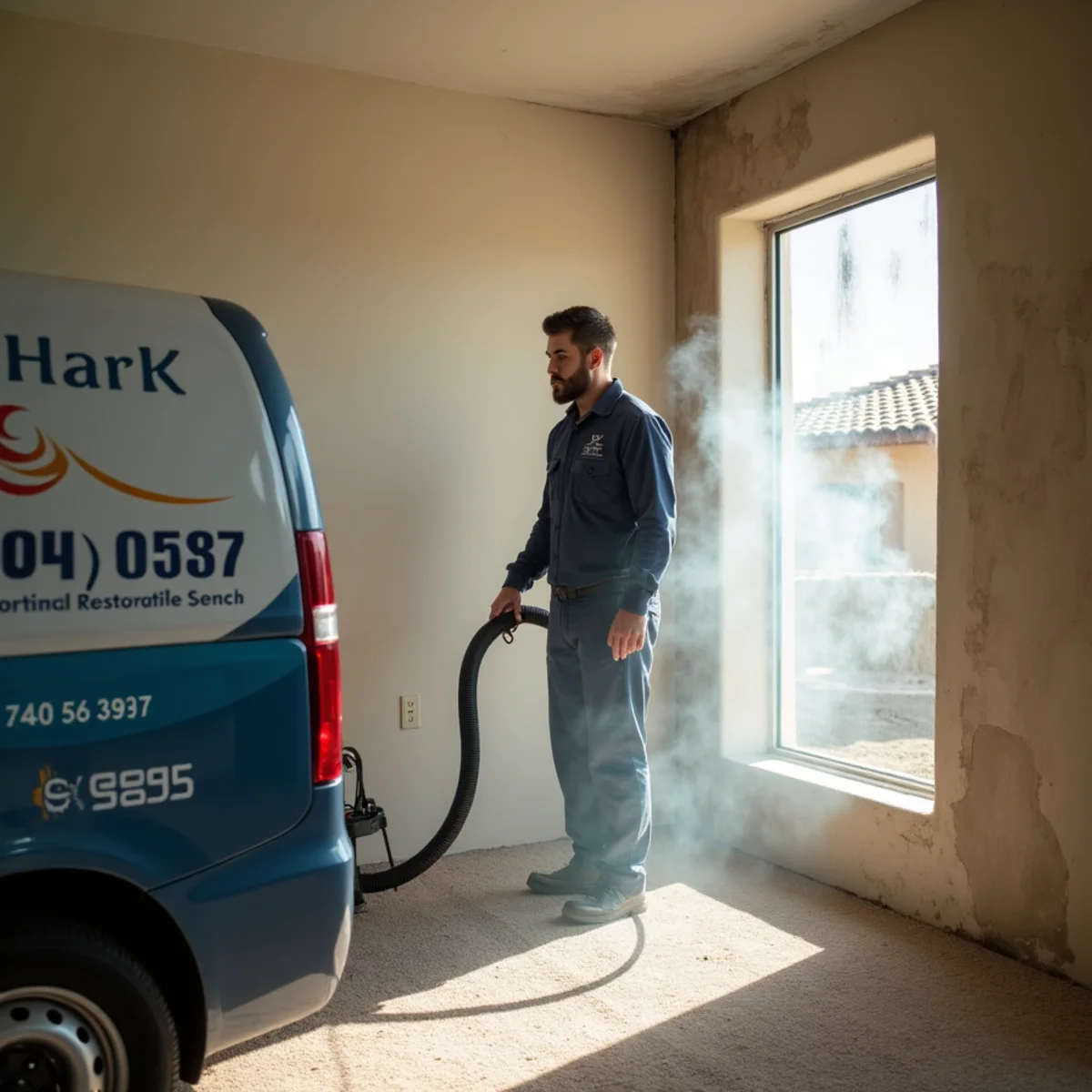
- Soot and smoke cleanup — HEPA vacuuming and cleaning residue off every affected surface
- Odor removal — deodorizing with thermal fogging, hydroxyl, or ozone, plus HVAC and duct cleaning
- Contents cleaning — cleaning, deodorizing, and inventorying salvageable belongings, and listing what is a loss
- Structural cleaning and debris removal — stripping out charred, unsalvageable materials
- Reconstruction — rebuilding what the fire destroyed, from drywall and paint to whole rooms
The factors that move the price most
When we assess a fire loss, a handful of things tell us most of what the cleanup will cost. None of them are guesswork once we can see the damage.
Two fires that look similar from the curb can cost very differently once you account for these. A fast kitchen fire caught early is not the same job as a smoldering overnight fire that coated the house in greasy wet smoke, even if the scorched area is the same size.
- Size and severity of the fire — a single scorched room versus multiple rooms and structural burn
- How far smoke and soot spread — smoke travels well past the flames and into the HVAC, so a small fire can still smoke-damage a whole house
- Wet smoke versus dry smoke — slow, smoldering fires leave a sticky, greasy residue that is far harder and slower to clean than the dry, powdery soot from a fast, hot fire
- How much water the fire department used — more water means more extraction, more drying, and more mold risk
- Contents affected — the more belongings exposed to smoke and soot, the more cleaning, inventorying, and replacing
- How much rebuild is needed — reconstruction is usually the largest cost, so the more that burned, the higher the total climbs
Active water emergency right now?
We answer 24/7 — a real person, not a machine.
A small contained fire versus a major loss
Broad ranges help set expectations, as long as you hold them loosely. Treat the figures below as a very rough frame, not a quote — your loss can easily fall outside them, and only an assessment produces a real number.
The spread between those is enormous, and that is the point. The same square footage of scorching can cost very differently depending on smoke type, water volume, and how much has to be rebuilt. An average pulled off the internet cannot know any of that about your home.
- Small, contained fire — one room, mostly light smoke and soot, little or no structural burn: cleanup and deodorizing often land in the hundreds to low thousands of dollars.
- Moderate fire — real smoke spread through much of the home, some structural damage, firefighting water to dry, and contents to clean: commonly runs into the several thousands to low five figures.
- Major loss — heavy structural burn, whole-home smoke and soot, significant water, and a large rebuild: can reach the high five figures into six figures, with reconstruction driving most of it.
The hidden water-damage cost fire victims miss
Here is the cost almost everyone forgets when they picture a fire: the water. Putting out a fire can leave a home as wet as a burst pipe would, and that water causes its own damage to drywall, flooring, framing, and contents — on top of the fire and smoke. It is a real part of the cleanup bill, not an afterthought.
In Arizona it carries a second cost if it is ignored. Firefighting water sitting in a hot house can start growing mold within 24 to 48 hours, and mold remediation is a whole separate job with its own price tag. A fire loss that is cleaned for smoke but never properly dried can turn into a mold loss a week later — paying twice for what one prompt dry-out would have prevented.
This is the part worth getting right the first time. Drying the structure fast, to the IICRC S500 standard, while the soot cleanup happens keeps the water from quietly doubling the scope. Handling both the fire and the water with one crew is the cheapest version of this job, because nothing sits wet waiting for a second company to show up.
How insurance usually fits
The cost conversation changes once insurance is in it, and for fire it usually leans in your favor. Fire is a core covered peril on a standard homeowners policy — not an optional add-on like flood or sewer backup. That generally means the policy responds to the structure, your belongings, and the cost of living elsewhere while the home is unlivable.
What you pay out of pocket usually comes down to your deductible and your limits, plus any sub-limits on high-value items and the cap most policies put on mold. Because fire is covered, the practical job is documenting the loss well and drying fast, so the water and any mold stay tied to the covered fire. This is general information, not legal or coverage advice, and your policy decides what it pays.
- Dwelling coverage — repairs and rebuilds the structure up to your limit
- Personal property coverage — pays for damaged or destroyed belongings, at actual cash value or replacement cost depending on your policy
- Loss of use — covers the extra cost of lodging and meals while you cannot live at home
How to get a real number for your home
Ranges are useful for bracing yourself; they are useless as a quote. Your home’s number comes from someone standing in it — gauging the smoke type, measuring the water, counting what is restorable versus a loss, and scoping the rebuild. That is the assessment, and ours is free.
We also document the whole loss as we go — photos, moisture readings, and a line-item scope — which is exactly what your adjuster needs to approve the right work, so the estimate does double duty. South Tempe Damage Restoration handles fire and water under one roof: emergency board-up, water extraction and drying, soot and smoke cleanup, odor removal, contents cleaning, and the rebuild.
If you are staring at a fire loss and have no idea what it will take, call (866) 688-0301. We answer 24/7, target a 60-minute response, and cover Tempe, South Tempe, Ahwatukee, Chandler, Mesa, Gilbert, and Scottsdale. To say it once more: this is general information, not legal or coverage advice, and your policy decides what it pays.
Frequently Asked Questions
Does insurance cover fire damage cleanup cost?
Usually, yes. Fire is a core covered peril on a standard homeowners policy, so the cost to clean, deodorize, dry, and rebuild after a covered fire is generally part of the claim, within your limits. You still pay your deductible, some items carry sub-limits, and mold is usually capped. A restoration company’s documented scope helps your adjuster approve the right work. This is general information, not coverage advice; your policy decides.
Is smoke damage cleanup expensive?
It can be, and it depends mostly on how far the smoke spread and what kind it is. Light smoke in one room is a modest job. Smoke that traveled through the whole house, soaked into contents, and coated the ductwork takes far more cleaning and deodorizing. Wet, greasy smoke from a smoldering fire costs more to clean than dry, powdery soot. A free assessment tells you where your loss sits.
How much does it cost to clean soot off walls?
There is no flat rate, because it depends on the soot. Light, dry soot on a sealed, painted wall cleans relatively cheaply by the square foot. Greasy wet smoke, protein residue from a kitchen fire, or soot that soaked into bare drywall is harder — sometimes the wall is cleaned and sealed, sometimes it has to come out and be replaced. We price it after seeing the residue and the surface, not over the phone.
How much does fire damage restoration cost in Arizona?
Anywhere from a few hundred dollars for a small, contained smoke cleanup to six figures for a major loss with heavy structural burn and a full rebuild. The range is that wide because fire losses vary that much. The honest answer for your home is a broad ballpark on the phone and a firm written number after a free on-site assessment.
Why can’t you give me a price over the phone?
Because an honest fire number depends on things we have to see — the type of smoke, how far it spread, how much water is in the structure, which contents are restorable, and how much has to be rebuilt. A phone quote on a fire is a guess, and a low guess helps no one when the real scope shows up. We will give you a broad range on the call and a written estimate after we look, at no charge.