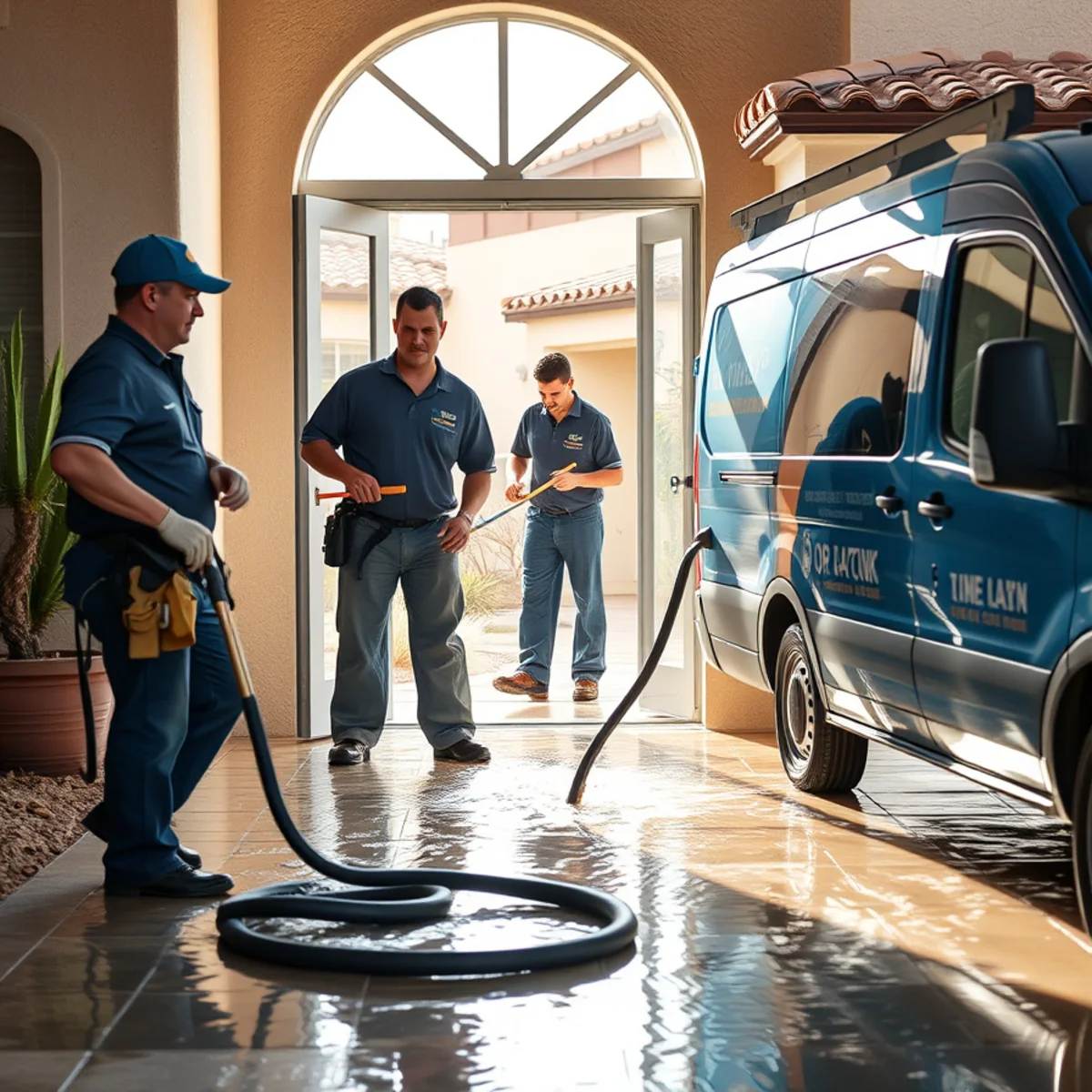
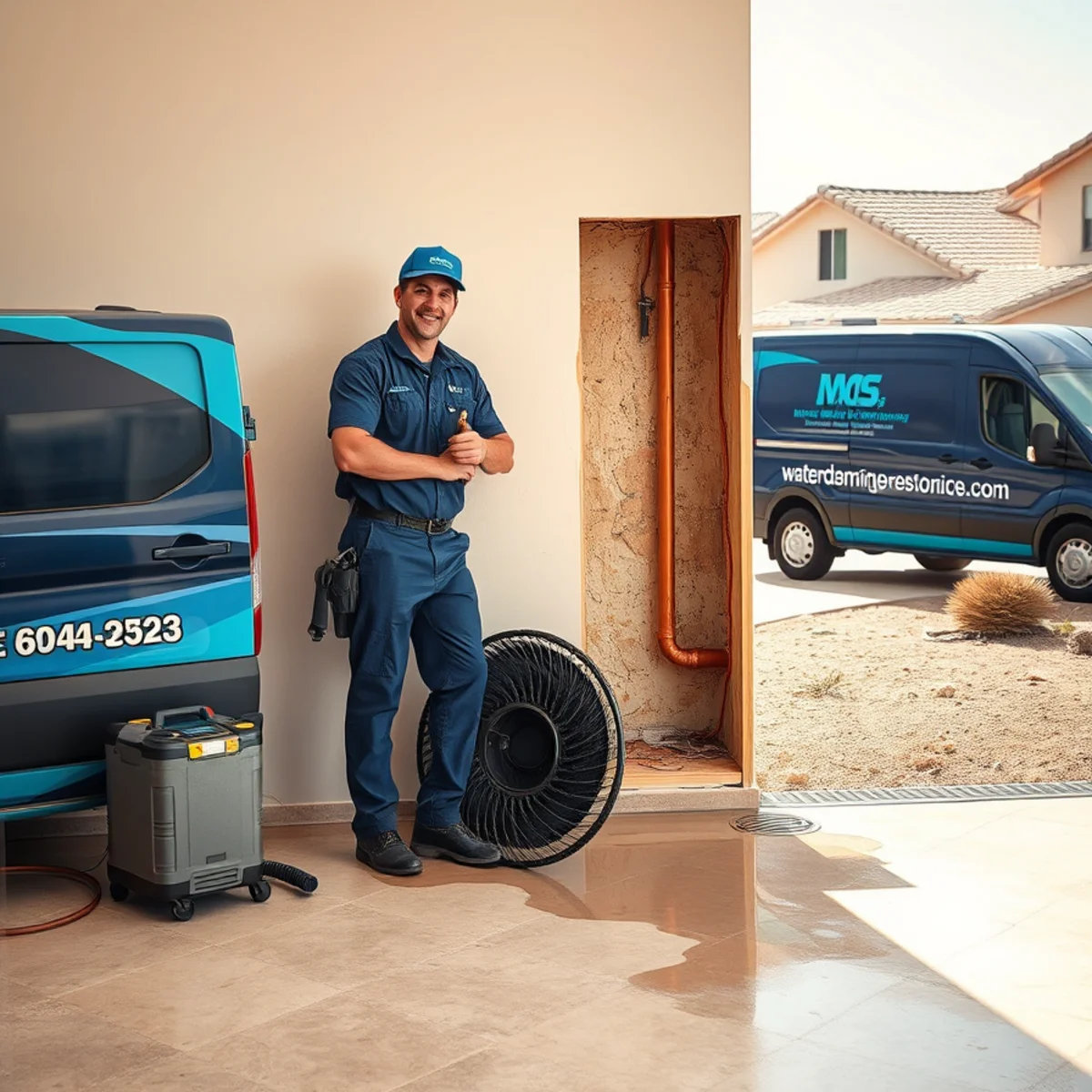
If water is spreading across your floor right now, here is the short version: call a water damage restoration company first, then get a plumber to fix the pipe. The two do different jobs. A plumber repairs the source — the broken pipe, valve, or fixture. A restoration company handles everything the water touched — extracting it, drying the structure, and preventing mold. Most burst-pipe and leak situations need both.
The confusion is understandable. Both show up when there is water where it should not be, and both sound like the people you call when a pipe breaks. But they fix different problems, and calling only one usually leaves half the job undone — a repaired pipe sitting above a soaked, moldy floor, or a dried-out room with a leak that is still dripping.
Here is exactly what each one does, why you generally need both, the right order to call them in, and who should be first on the phone when water is actively coming in.
Key Takeaways
- A plumber fixes the source — the pipe, valve, fixture, or water heater.
- A restoration company handles the water: extraction, drying, mold prevention, and rebuild.
- Most leaks need both; one without the other leaves the job half-done.
- Order: stop the water, call for water help right away, repair the pipe, then dry and rebuild.
- Insurance often covers the damage but not the pipe repair itself — keep records from both.
What a plumber does
A plumber works on the plumbing itself — the pipes, valves, fixtures, and water heater. When a supply line bursts or a fitting fails, the plumber is who finds the failure point and repairs or replaces it so the leak stops at the source.
In Tempe that source is often predictable. Hard water here runs 16 to 25 grains per gallon, and years of mineral scale wear out pipes, water heaters, and fittings faster than in soft-water regions. Homes built in the 1980s and 1990s may still have polybutylene supply lines, which were prone to failure and are a common culprit behind sudden leaks. A plumber diagnoses and fixes that hardware. What a plumber does not typically do is dry your home or repair the water damage.
- Locates and repairs the failed pipe, valve, fixture, or water heater.
- Replaces aging or failed supply lines, including polybutylene.
- Stops the leak at its source.
What a water damage restoration company does
A restoration company deals with the aftermath — the water that already escaped and everything it soaked. That is a different trade with different equipment.
The work starts with extracting standing water, then drying the structure with commercial air movers and dehumidifiers, monitored to a verified moisture standard so hidden moisture does not linger inside walls and under floors. If the water was contaminated, it includes containment and disinfection under the IICRC S500 standard. And because the same crew here also rebuilds, it carries through to replacing drywall, flooring, and finishes. The goal is to prevent mold and return the home to its pre-loss condition.
- Extracts standing water and dries the structure to a verified standard.
- Prevents and addresses mold growth.
- Removes and disinfects contaminated materials when needed.
- Rebuilds — drywall, flooring, paint, and finish work.
Active water emergency right now?
We answer 24/7 — a real person, not a machine.
Why you usually need both
Picture a burst supply line under a kitchen sink that ran for a few hours. A plumber replaces the line, and the leak stops. But the cabinet, the flooring, the drywall, and possibly the subfloor are soaked. Left alone, that trapped water grows mold within a day or two in Arizona’s heat. The plumber solved the cause; the consequences are still sitting in your floor.
Now flip it. A restoration crew dries everything perfectly, but if the cracked pipe was never repaired, it leaks again the moment the water is back on. One trade fixes the source, the other fixes the damage. For most real-world leaks, skipping either one leaves you with a problem.
The right order to call them
The sequence that works best looks like this.
- Stop the water. Shut off the fixture valve or the home’s main supply so no more water comes in.
- Call for water damage help. Extraction and drying should start as fast as possible — the clock on mold is already running.
- Get the plumber to repair the source. The line has to be fixed before the water is safely turned back on.
- Let restoration finish drying and rebuilding once the structure is dry and the leak is fixed.
Who to call first in an emergency
When water is actively spreading, call for water damage help immediately — it does not have to wait on the plumber. Extraction and drying are the time-sensitive part, because mold can start within 24 to 48 hours and every hour of standing water deepens the damage. Mitigation and the plumbing repair often overlap, and that is fine. Drying a home takes several days, which leaves plenty of time for a plumber to repair the line in parallel.
Shut off the water at the valve or the main if you can reach it safely, then call us. We answer 24/7 and target a 60-minute response across Tempe, Ahwatukee, Chandler, and the rest of Maricopa County. If you are not sure which trade you even need, we will tell you straight once we see it. Call (866) 688-0301.
A note on insurance
Here is a distinction that trips people up on claims. Homeowners insurance often covers the water damage — the extraction, drying, and repairs a restoration company handles after a sudden, accidental leak. It typically does not pay to fix the failed pipe itself, which is considered a maintenance or plumbing cost. In other words, the damage may be covered even when the plumbing repair is not.
Keep documentation from both trades. The plumber’s record of what failed and the restoration company’s moisture readings and scope both help support a claim. This is general information, not coverage advice — your policy and your adjuster decide what is covered.
Frequently Asked Questions
Do I call a plumber or a restoration company first?
In an active leak, call for water damage help first — extraction and drying are time-sensitive, and it does not have to wait on the plumber. Shut off the water at the valve or main if you can, then call us. You can line up the plumber to repair the pipe in parallel while drying is underway.
Will a plumber dry out the water damage too?
Generally no. A plumber’s job is the plumbing — finding and repairing the failed pipe or fixture. Drying the structure, preventing mold, and repairing soaked drywall and flooring is a separate trade with different equipment. For most leaks you need both a plumber and a restoration company.
Does homeowners insurance cover the plumber or the water damage?
Often it covers the water damage from a sudden, accidental leak but not the repair of the failed pipe itself, which is treated as maintenance. The damage and the source repair are usually handled as separate line items. This is general information, not coverage advice — your policy decides.
The leak stopped on its own. Do I still need anyone?
Probably yes. A leak that stopped may have already soaked flooring, drywall, and subfloor, where hidden moisture can grow mold within a day or two. It is worth having the area checked and dried, and having a plumber confirm the source is not about to fail again. A free assessment will tell you where you stand.
Can you coordinate with my plumber?
Yes. We routinely work alongside plumbers — we handle the extraction, drying, and rebuild while the plumber repairs the line. If you already have a plumber, we coordinate timing so the pipe is fixed before the water goes back on and drying is not delayed.