Mold remediation in Arizona does not have a flat price, and anyone who quotes you a firm number sight unseen is guessing. The cost depends on how much area is affected, where the mold is hiding, how long it has been growing, whether testing is needed, and what caused it. A small surface patch on bathroom drywall sits at the low end. Mold spread behind walls or through an HVAC system sits much higher.
What this guide gives you instead of a fake number: the factors that actually move the price, broad and honest ranges so you are not walking in blind, and the Arizona-specific reason that catching mold early saves you a lot of money. For a real figure on your home, the only reliable path is an on-site inspection — we look, measure, and put it in writing.
Here is what you are paying for, what pushes the cost up or down, and where insurance usually does and does not help.
Key Takeaways
- There is no flat price — mold remediation cost tracks area size, location, age of growth, and cause.
- Visible surface patches sit at the low end; mold hidden in walls, floors, or HVAC sits much higher.
- In Arizona’s heat, mold can start in 24 to 48 hours, so catching it early is far cheaper.
- Many policies limit or exclude mold unless it stems from a sudden, covered water loss — read your endorsement.
- The only reliable number is a free on-site inspection — call (866) 688-0301.
What you are actually paying for
Mold remediation is a sequence of jobs, not a single service, and each one carries its own labor and equipment cost. Seeing the steps makes the pricing make sense.
- Inspection and testing — finding the mold, identifying the moisture source, and sometimes lab sampling.
- Containment — sealing off the work area with plastic barriers and negative air pressure so spores do not spread.
- Removal — taking out moldy drywall, insulation, carpet, and other materials that cannot be cleaned.
- Air scrubbing and cleaning — HEPA filtration and cleaning of surfaces that can be saved.
- Clearance — verifying the area is clean and fixing the water source so the mold does not come back.
The factors that move the price the most
When we inspect a home, a handful of things tell us most of what remediation will cost. None of them are guesswork once we can see and measure the growth.
- Size of the affected area — a few square feet versus a whole room or multiple rooms.
- Where it is — surface mold you can see is cheaper than mold hidden behind walls, under floors, or inside HVAC ducts.
- How long it has grown — older, established growth spreads into more materials and takes more to remove.
- Whether testing is needed — lab sampling before and after adds cost but is sometimes worth it.
- The cause and water source — remediation only lasts if the leak or moisture driving it is fixed too.
- Contamination level — the dirtier the water that fed the mold, the more involved the cleanup.
Active water emergency right now?
We answer 24/7 — a real person, not a machine.
A small surface job versus a large hidden job
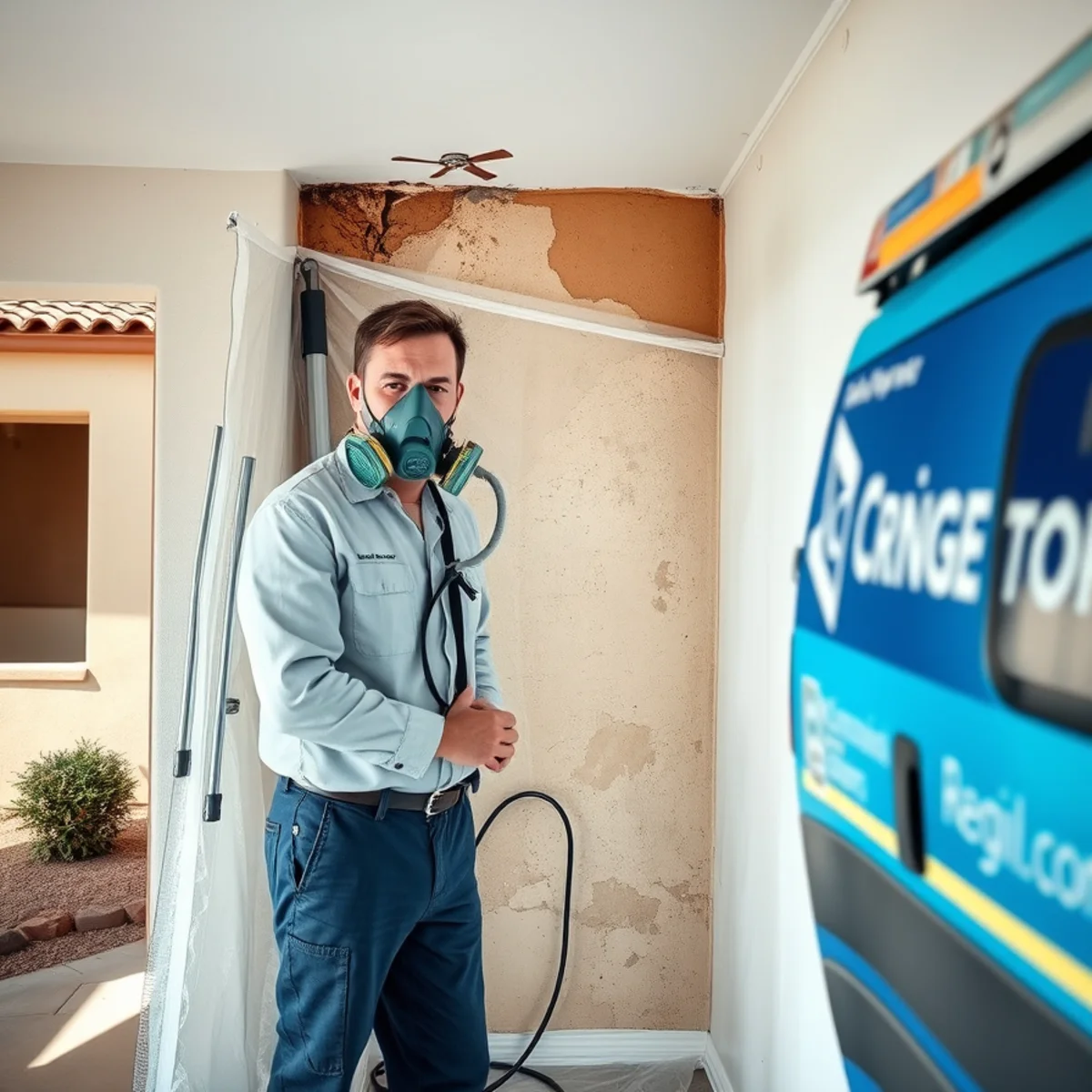
At the low end is a small, visible patch — say, mold on bathroom drywall from a slow fixture leak, caught early, under about ten square feet. That is a contained removal and cleaning, and it sits toward the lower end of the range.
At the high end is mold that has spread behind walls, under flooring, or into the HVAC system, often from a leak that went unnoticed for weeks. That requires extensive containment, removal of large amounts of material, air scrubbing, and sometimes reconstruction afterward. The gap between the two is large, which is exactly why an average pulled off the internet will not tell you what your job costs. Any range we give over the phone is broad on purpose; the specific number comes from the inspection.
The Arizona angle — why early beats cheap
Arizona’s climate changes the math on mold. After a water leak, mold can begin growing within 24 to 48 hours, and the heat here sits at the fast end of that window. What starts as a damp spot can become an established colony in a matter of days.
That speed is why catching mold early is far cheaper than waiting. A leak dried quickly may need no remediation at all. The same leak ignored for a week can mean tearing out walls. During monsoon season, from mid-June into late September, roof leaks and storm intrusions give mold even more openings. The practical takeaway: the cost of mold is tied directly to how fast you deal with the water behind it. Fast drying is the cheapest form of mold control there is.
The insurance reality
Mold coverage is where a lot of homeowners get an unwelcome surprise. Many Arizona policies limit or exclude mold outright, and those that do cover it often cap the payout at a few thousand dollars. The usual exception is when the mold results directly from a sudden, accidental, covered water loss — a burst pipe that was mitigated promptly, for example. Mold from a long-ignored leak or from humidity is frequently treated as a maintenance issue and excluded.
This is general information, not coverage advice — your specific policy and adjuster decide what is covered. The practical move is to read your mold endorsement, document everything, and address covered water losses fast so the resulting mold, if any, stays tied to a covered event.
How to get a real number
Broad ranges help you set expectations, but your home’s number comes from an inspection. We find the mold, trace the moisture source, measure the affected area, and give you a written scope and estimate you can use with your insurer. The inspection is free.
If you can see mold, smell a musty odor, or have had a water leak that was not dried quickly, get it looked at before it spreads. Call (866) 688-0301 and we will come assess it across Tempe, Ahwatukee, Chandler, Mesa, Gilbert, Scottsdale, and the surrounding area.
Frequently Asked Questions
Is mold remediation covered by insurance in Arizona?
Sometimes, but it is often limited or excluded. Many Arizona policies cap mold coverage or pay only when the mold results from a sudden, accidental, covered water loss like a burst pipe. Mold from a gradual leak or humidity is frequently excluded as maintenance. This is general information, not coverage advice — your policy decides.
How much does it cost to remove black mold?
There is no flat rate, and the color of the mold matters less than the size and location of the growth and the moisture feeding it. A small, contained patch costs far less than mold spread behind walls or through an HVAC system. We give broad ranges over the phone and a firm written number after a free inspection.
Do I need mold testing, and does it add to the cost?
Not always. For a small, clearly visible patch, testing may be unnecessary. It adds value when the extent is unclear, when someone in the home has health concerns, or when you want documented clearance afterward. Testing does add cost, so we will tell you honestly whether your situation warrants it.
Can I just clean the mold myself to save money?
A small surface spot on a hard, non-porous surface can sometimes be cleaned by a homeowner. But mold on porous materials like drywall, or anything larger than a small patch, usually needs proper containment so you do not spread spores through the home. If there is a hidden moisture source, surface cleaning alone will not stop it from returning.
How can I keep mold remediation costs down?
Speed is the biggest lever. The faster a water leak is dried, the less chance mold has to establish and spread into more materials. Fixing the moisture source, addressing leaks during monsoon season quickly, and getting an early inspection all keep a small job from becoming a large one.